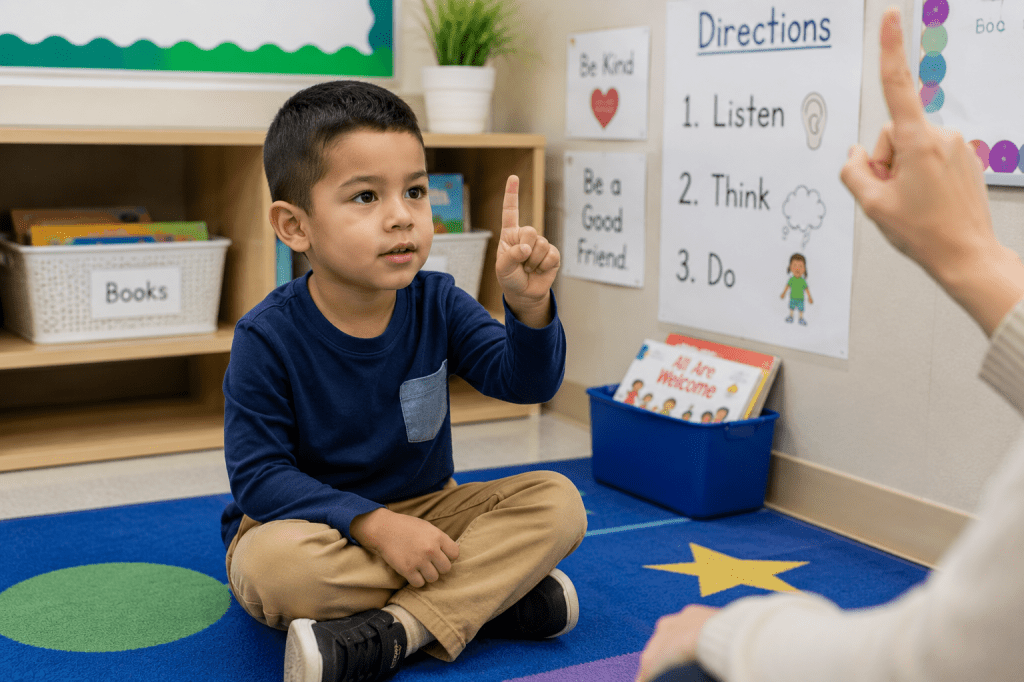
Introduction
Have you ever asked a child to put on their shoes, clean up their toys, or come to the table for dinner, only to find yourself repeating the same direction over and over again? Have you had those thoughts, “Why aren’t they listening to me? How many times do I have to repeat this until they actually do what I am asking? Am I just talking to hear myself talk? Does literally anyone hear me?” If you have, then you are not alone. The challenge of following directions is a common battle for most kiddos as they develop a skill set.
Following directions is a skill that many of us expect children to develop naturally, but it actually requires a combination of listening, attention, and self-regulation. Following directions is a skill that is learned over time with lots of practice. For young children, following directions is an essential part of everyday life and will play a significant role in kindergarten success.
Long before children begin learning their ABCs and 123s in school, they must first learn how to listen and respond to instructions. These foundational skills help children participate in their school schedule and activities and build independence throughout the day.
Following directions is a necessary skill that supports a child’s learning, independence, and social success. Children who can listen and respond appropriately will be better prepared to participate in classroom activities and daily routines.
The good news is that following directions is a skill that can be practiced and strengthened through everyday experiences at home.
What Does Following Directions Mean?
Following directions involves more than a child just “doing what you say”. Children need to go through a process. They first need to listen to your instructions, understand what is being asked of them, remember the information, and then follow through.
For young children, this process can be challenging because it requires several developing skills working together simultaneously. These skills include:
- Attention and focus
- Listening skills
- Memory
- Self-control
- Language comprehension
- Problem-solving
As children grow, they gradually learn to follow more complex directions and complete tasks independently. For little ones, just a one-step direction can be challenging, which is why the ten-minute fiasco of putting on shoes happens on the daily. As children continue to develop, they will go through the process of directions with greater ease and comprehension.
Why Following Directions Matters in Kindergarten
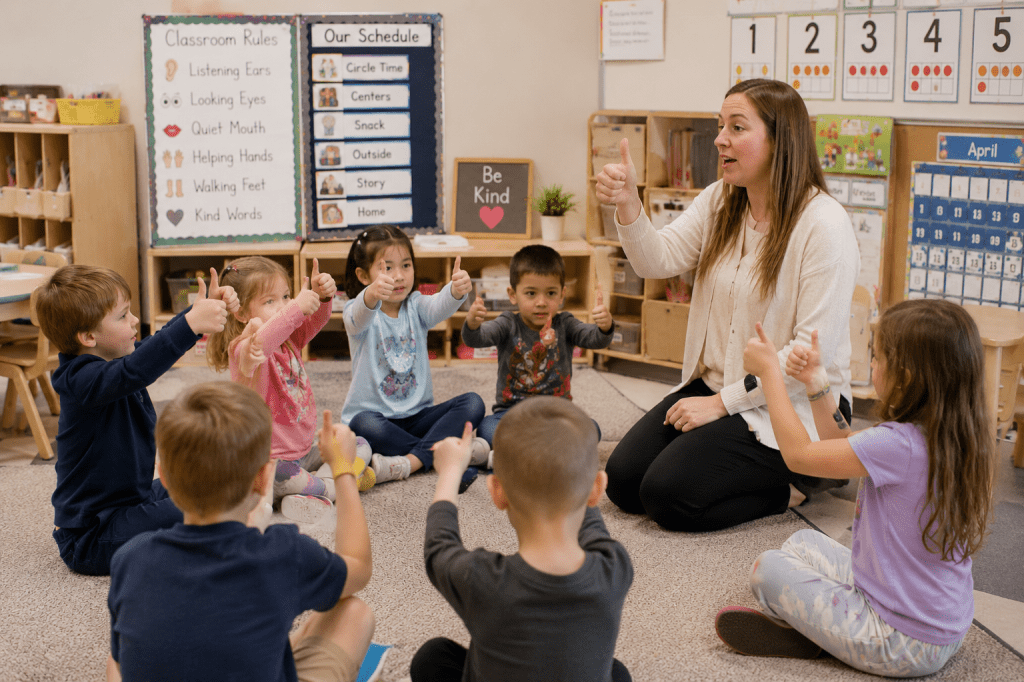
Kindergarten classrooms are very busy environments filled with energy and learning where teachers provide instructions all day long. With a busy environment inevitably comes more expectations.
Children are expected to:
- Follow classroom routines
- Transition between activities
- Participate in group lessons
- Complete simple tasks independently
- Follow safety expectations
- Listen during stories and discussions
When children can successfully follow directions, they can participate more fully in learning experiences and feel confident as they navigate their day at school.
Having strong listening skills can also reduce frustration because a child can better understand what they need to accomplish, resulting in fewer frustrations throughout the day. More learning can then take place.
Following Directions Supports Learning
Many classroom activities begin with a teacher providing clear directions. Whether children are creating a work of art, participating in group time, or lining up for recess, they need to be able to listen and follow directions.
Children who can follow directions are often better able to:
- Stay engaged in learning activities
- Complete tasks successfully
- Participate in group experiences
- Develop independence
- Build confidence in new situations
These skills allow children to focus more on learning and less on figuring out what they should be doing. When a child is consistently focused on what is coming next, they become distracted and anxious, leaving less opportunity for quality learning.
Why Some Children Struggle With Following Directions
It is important to remember that young children are still learning the skills needed to follow directions consistently.
Children may struggle when:
- Directions contain too many steps.
- They are distracted by their environment.
- They are tired, hungry, or overwhelmed.
- They do not fully understand the language being used.
- They are focused on something else.
- The expectation is beyond their developmental level.
When a child is having a challenging time following directions, it does not automatically mean they are not listening or are trying to be defiant. It is important not to jump to the conclusion that a child who is not following a set of instructions is doing it on purpose. Often, they need additional support, practice, and repetition. The child may not be developmentally ready to listen to and follow directions. So a little extra friendly reminders, and maybe a little extra patience can go a long way.
The Connection Between Listening and Self-Regulation
Following directions and self-regulation go hand in hand.
Children must be able to pause, listen, and manage their impulses before responding to instructions. Sound familiar? These are the same steps a child needs to take to regulate their body. If a child is excited, frustrated, distracted, or experiencing strong emotions, it will be a challenge to take in any information, and even less to process it appropriately.
Therefore, as children strengthen their emotional regulation skills, it only makes sense that they have an easier time following directions, waiting their turn, and participating in class activities. All of which are essential skills for kindergarten success.
Simple Ways to Practice Following Directions at Home
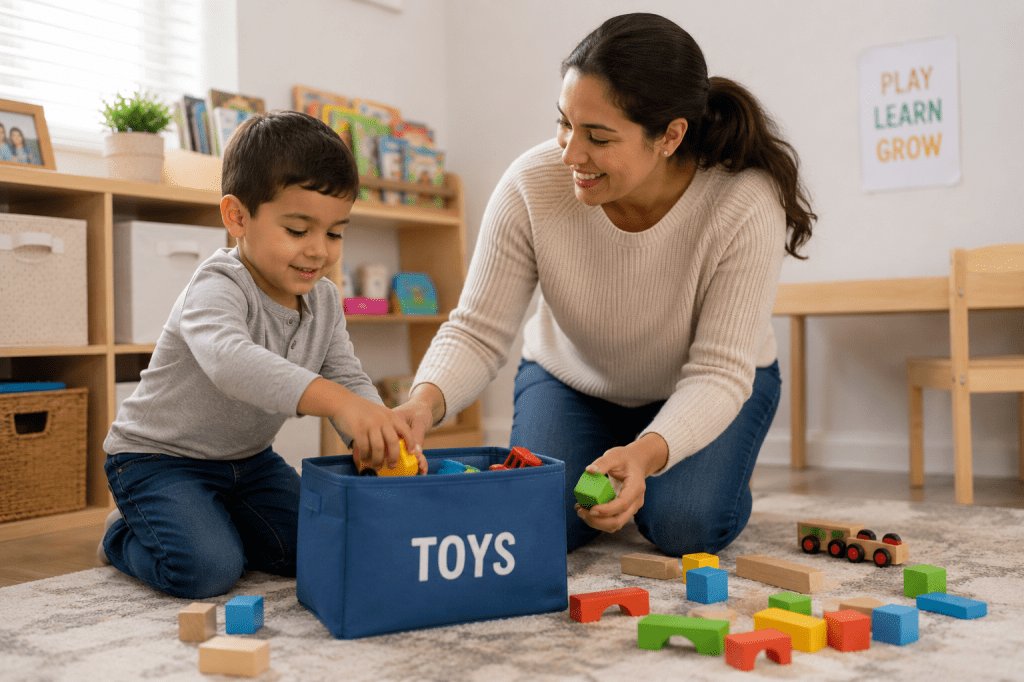
The best way to practice listening skills at home is through simple, everyday activities.
Try:
- Playing “Simon Says”
- Following simple scavenger hunt clues
- Helping prepare meals
- Setting the table
- Cleaning up toys
- Participating in obstacle courses
- Playing movement games
- Completing simple household chores
- Following directions during art projects
- Listening and responding during story time
Keep directions short and clear, especially for younger children. Start with simple one-step directions.
For example:
“Please put your shoes by the door.”
As a child becomes more successful with the one-step directions, gradually introduce two-step directions:
“Please put your shoes by the door and wash your hands.”
Encouragement Matters
Children learn best when they feel successful. Little wins make a huge difference. It is important not to overwhelm or push too hard when practicing directions.
Additionally, avoid only pointing out mistakes. We don’t want negativity to bring down that self-confidence we are trying to build. Instead, acknowledge when a child follows directions independently.
You might say:
- “You listened carefully.”
- “You followed both directions all by yourself.”
- “Thank you for helping.”
- “You remembered exactly what to do.”
Positive encouragement helps children build confidence and motivates them to keep practicing.
Kindergarten Readiness Is More Than Academics
Following directions is one of the most important skills children use throughout the school day. While letters, numbers, and early literacy skills are valuable, children also need strong listening, attention, and self-regulation skills to succeed in the classroom.
By providing opportunities to practice listening and following directions at home, families can help children build the confidence and independence needed for a successful transition to kindergarten.
Conclusion
Following directions is a skill that supports learning, social skills, and independence. Like any skill, it develops through practice and encouragement over time. It is also extremely beneficial to practice at home through everyday activities that are familiar to the child.
The simple opportunities children have each day to listen, respond, and participate in routines help prepare them for future success in kindergarten.
 The Intentional Classroom Co
Leave a comment