Introduction
When we think about kindergarten readiness, the focus is often on academic skills such as recognizing letters, counting, and writing a name. While these skills are important, teachers consistently emphasize another skill that has a significant impact on a child’s success in school: independence.
Independent children are better prepared to navigate the expectations that come along with kindergarten. The many new expectations include classroom routines, solving simple problems, following directions, and participating confidently in learning experiences. Building independence before kindergarten helps children develop confidence, responsibility, and resilience—skills that support success both in school and beyond.
The good news is that independence is not something children either have or don’t have. It is a skill they can develop over time through practice, encouragement, and a whole lot of patience!
What Is Independence?
Independence is a child’s ability to complete age-appropriate tasks with little assistance from others. It involves making their own choices, taking responsibility for their things, and participating in daily routines.
Independent children are not going to do everything perfectly; however, they are willing to try, possibly fail, and then learn from their mistakes. Most importantly, they are resilient and will keep trying.
Why Independence Matters in Kindergarten
Kindergarten classrooms are busy environments, and kindergarten teachers are even busier. They are busy juggling children, behaviors, schedules, curriculum, parents, and so much more. For a classroom to be successful, kindergarten students need some independence throughout the day and the ability to complete tasks without consistent teacher assistance.
Children who have developed independence often feel more confident when entering kindergarten because they are comfortable managing everyday routines and responsibilities.
Independent children are more likely to:
- Follow classroom routines.
- Transition between activities successfully.
- Care for personal belongings.
- Make choices independently.
- Solve simple problems.
- Ask for help when needed.
- Demonstrate confidence in new situations.
When children can manage these everyday tasks, they have more energy available for learning, making friends, and participating in classroom activities.
Everyday Independence Skills Kindergarten Teachers Notice
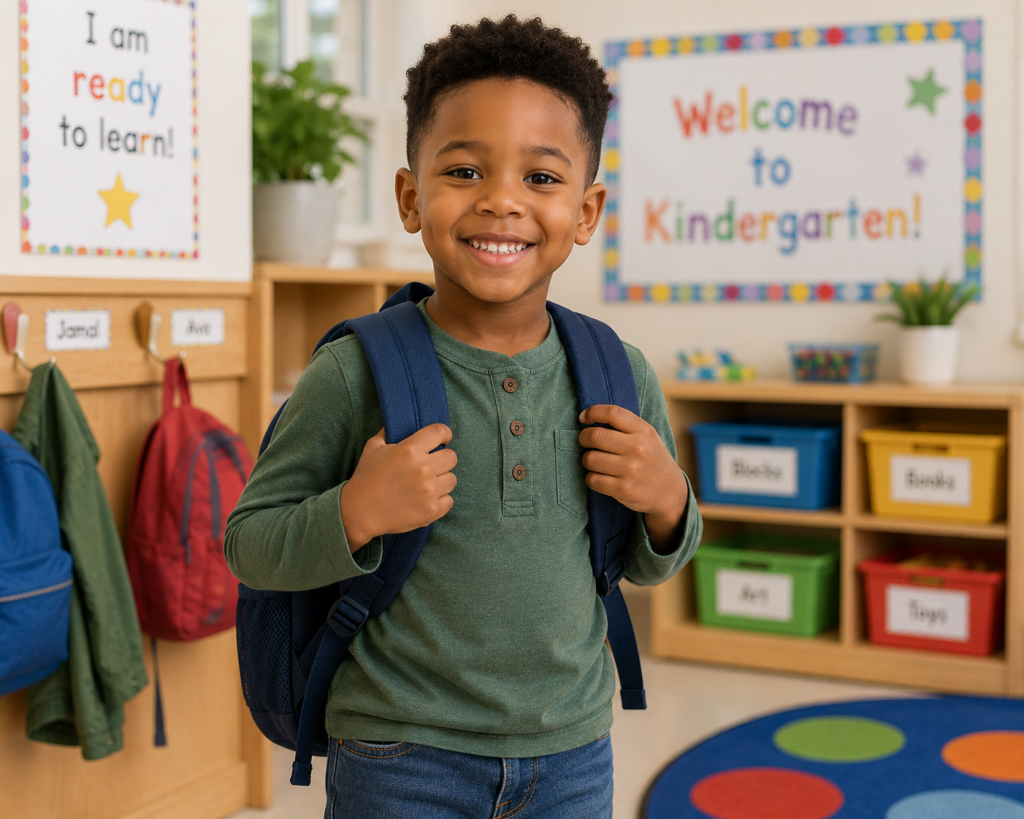
Before kindergarten, children can begin practicing simple self-help and responsibility skills to prepare better and set themselves up for success. These self-help skills include
- Putting on and taking off coats independently.
- Washing hands without assistance.
- Opening lunch containers and snack packages.
- Cleaning up after activities.
- Following simple directions.
- Putting away personal belongings.
- Using the bathroom independently.
- Carrying a backpack.
- Making simple choices.
- Asking for help appropriately.
These skills may seem small, but they are a huge help during a regular day at kindergarten. Knowing these skills helps children feel capable and confident while at school.
Independence Builds Confidence
One of the greatest benefits of independence is the confidence it brings. Each time a child completes a task on their own, they begin to see themselves as capable.
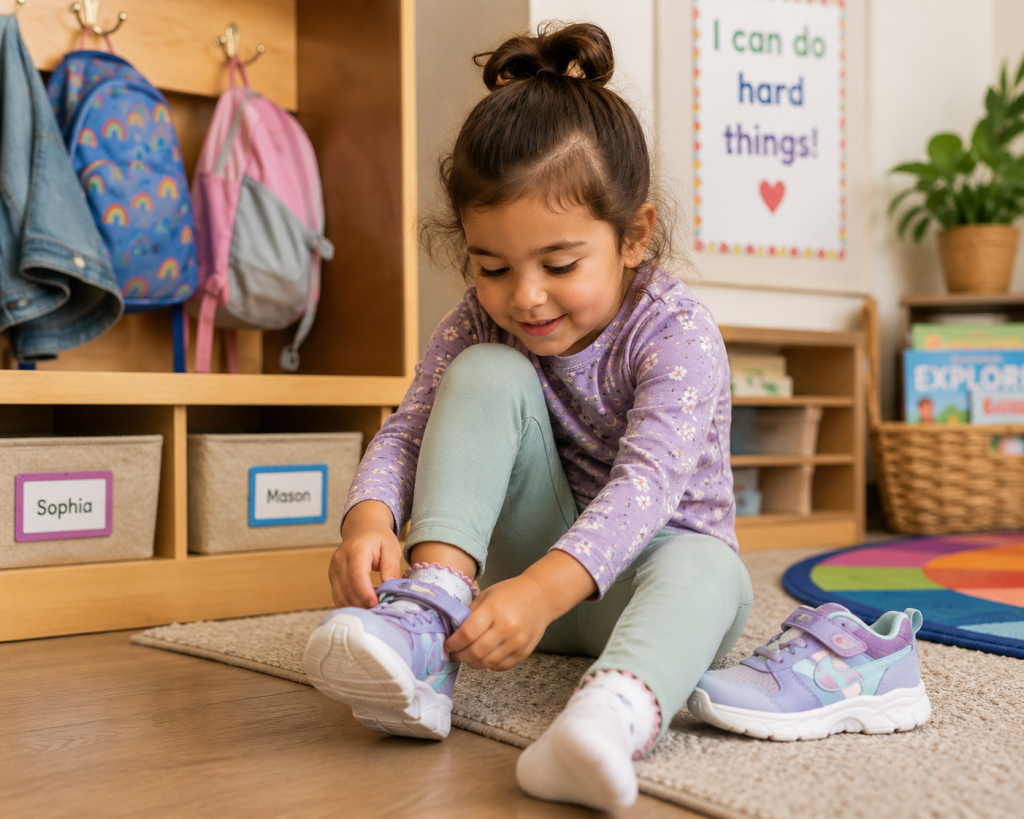
Sometimes it can be tempting to step in and help immediately when a child is struggling. It is especially challenging when you are already running late, and your child is insisting they put on their own socks and shoes, but it is taking… forever. Although it is tempting to take the shortcut to save time and get out that door, doing so takes away that moment of success that builds their confidence. It may seem like a small task to us, but to a child, even putting on their own shoes can be a big accomplishment. Sometimes, we have to let them struggle a bit so they can figure it out on their own. While you go through this process with a child, you can support them constructively and foster their confidence.
Children grow more confident when they hear messages such as:
- “I know you can try.”
- “Let’s figure it out together.”
- “You worked hard on that.”
- “What do you think you could do next?”
These experiences help children develop a growth mindset and trust in their own abilities. It provides them with an opportunity to learn new skills and continue to flourish.
Simple Ways to Build Independence at Home
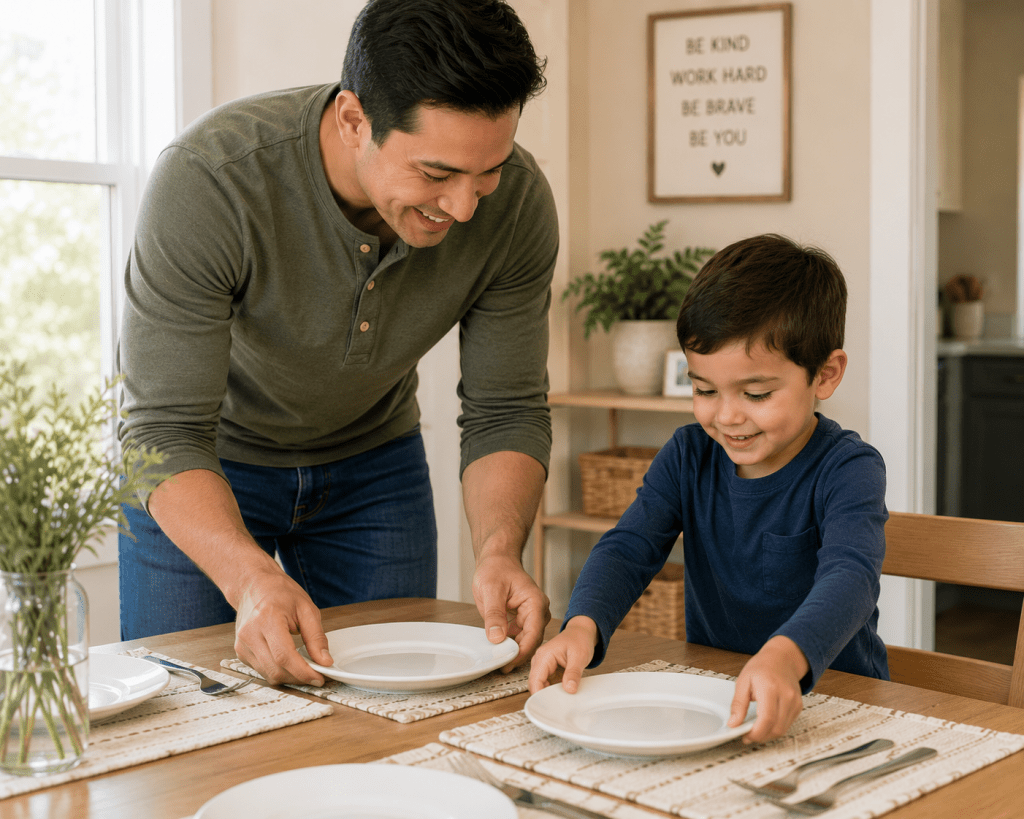
The best way to encourage independence is through everyday routines.
Try offering opportunities for children to:
- Put away toys after play.
- Help set the table.
- Feed a pet.
- Choose clothing for the day.
- Pack items into a backpack.
- Help prepare simple snacks.
- Water plants.
- Clean up spills.
- Complete simple chores.
- Follow visual routines.
Giving children meaningful responsibilities helps them feel valued and capable while teaching important life skills.
Allow Time for Practice
Building independence is more than likely going to take quite a bit longer than if you were to take over and do it yourself. While it may be faster to zip a coat or put away toys yourself, children need opportunities to practice these skills repeatedly. If they are stuck or unsure what to do next, simply model, then let them take over. If toys are scattered everywhere and the child is overwhelmed, give them a guideline on where to start. “I see there are Legos all over the floor. Can you find all the red ones and put them in the basket?” You are just giving them a little direction, but allowing them to focus, take over, and build their confidence.
Remember that mistakes are a normal part of learning. Children will develop independence when we provide support, encouragement, and patience rather than expecting perfection.
The name of the game is progress, not perfection.
Independence and School Readiness
Kindergarten readiness involves much more than academic knowledge. Children who can manage simple daily tasks, follow routines, and solve problems often experience a smoother transition into school.
By encouraging independence at home, families can help children develop the confidence and skills needed to approach new experiences with curiosity and resilience rather than with anxiety or dread.
Conclusion
Independence is one of the most valuable gifts we can give young children. Through everyday opportunities to help, make choices, and take responsibility, children learn that they are capable.
The small moments of independence practiced today help build the confidence, responsibility, and resilience that children will carry into kindergarten and throughout their lives.
 The Intentional Classroom Co
Leave a comment