Starting kindergarten is an exciting milestone for children and families. Many parents spend time practicing letters, numbers, and writing skills before the first day of school. While these academic skills are helpful, kindergarten teachers often say they are not the most important predictors of success.
In reality, children who can follow routines, communicate their needs, and manage everyday challenges often transition more smoothly into the kindergarten classroom than children who simply know their ABCs. The good news is that many of these skills can be developed through everyday experiences at home.
Here are some of the skills kindergarten teachers wish children had before walking through the classroom door for the first time.
1. Following Simple Directions
Kindergarten classrooms are busy places. Teachers regularly give directions to groups of students throughout the day. Children who can listen and follow one- or two-step directions are often better prepared to participate in classroom activities.
One of the most important skills children can bring to kindergarten is the ability to listen to and follow simple directions. Throughout the school day, teachers give instructions that help children transition between activities, participate in learning, and stay safe.
Examples include:
- Put your backpack in your cubby and join us on the carpet.
- Wash your hands before snack.
- Put away your crayons and line up at the door.
Following directions involves several important skills, including listening, paying attention, remembering information, and controlling impulses. These executive functioning skills are essential for success in the classroom.
Families can help children practice by encouraging them to follow routines, clean up toys, help with simple chores, and play games such as Simon Says. You can also practice two-step directions like, “Pick up the book and put it on the table.”
Children do not need to follow every direction perfectly before kindergarten. However, having experience listening, processing information, and responding appropriately helps them feel more confident and successful as they adjust to classroom routines.
2. Managing Big Feelings
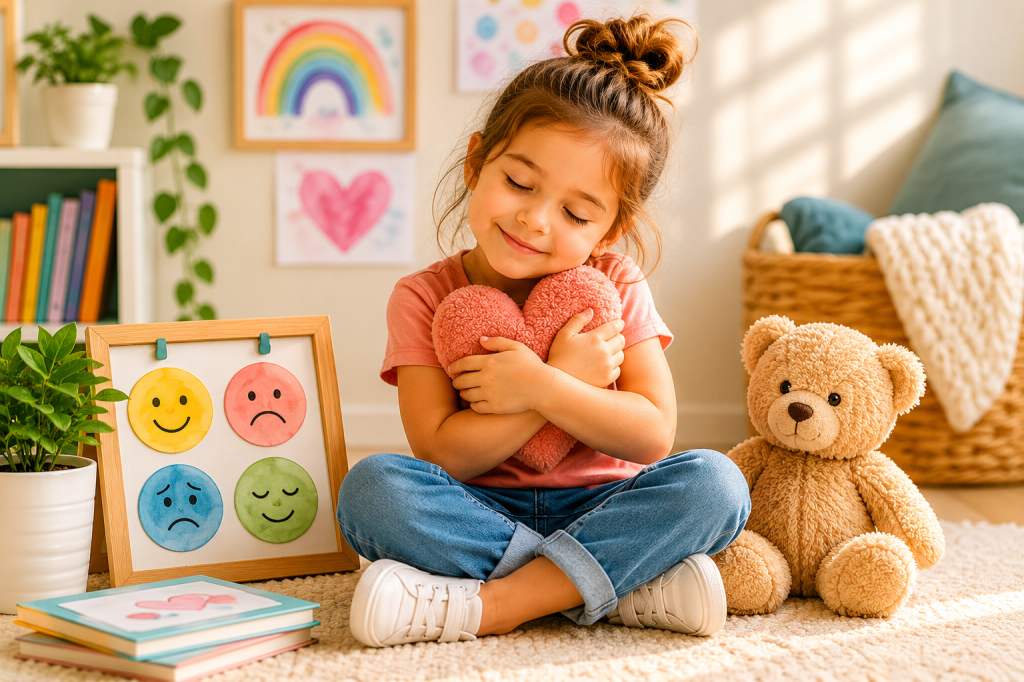
Kindergarten brings many new experiences, including meeting new friends, learning new routines, and spending more time away from family. It is normal for children to feel excited, nervous, frustrated, or disappointed as they adjust to these changes.
Children do not need to manage their emotions perfectly before kindergarten. However, teachers hope children are beginning to recognize their feelings, use words to express emotions, and accept support from adults when needed. Skills such as taking a deep breath, asking for help, or calming down after becoming upset can make a big difference in the classroom.
Families can support emotional regulation by talking about feelings, reading books about emotions, modeling calm responses, and helping children practice simple coping strategies. These experiences help children build the confidence and self-control needed to navigate challenges and form positive relationships at school.
3. Taking Turns and Sharing
Learning alongside twenty or more classmates requires cooperation. Kindergarten teachers appreciate children who are beginning to understand that they cannot always be first and that others have ideas and needs too.
Important social skills include:
- Waiting for a turn
- Sharing materials
- Listening while others speak
- Participating in group activities
- Solving simple conflicts with support
Kindergarten classrooms are filled with opportunities for children to learn, play, and work alongside others. Whether they are participating in a group activity, sharing classroom materials, or waiting for a turn to speak, children are expected to cooperate with their peers throughout the day.
Teachers understand that taking turns and sharing are skills that develop over time. However, children who are beginning to wait patiently, share materials, listen to others, and handle not always being first often have an easier time building friendships and participating in classroom activities.
Families can help children practice these skills through board games, cooperative play, family activities, and everyday situations that require waiting and sharing. Learning to take turns, compromise, and consider the needs of others helps children develop the social skills needed to thrive in a kindergarten classroom.
4. Asking for Help
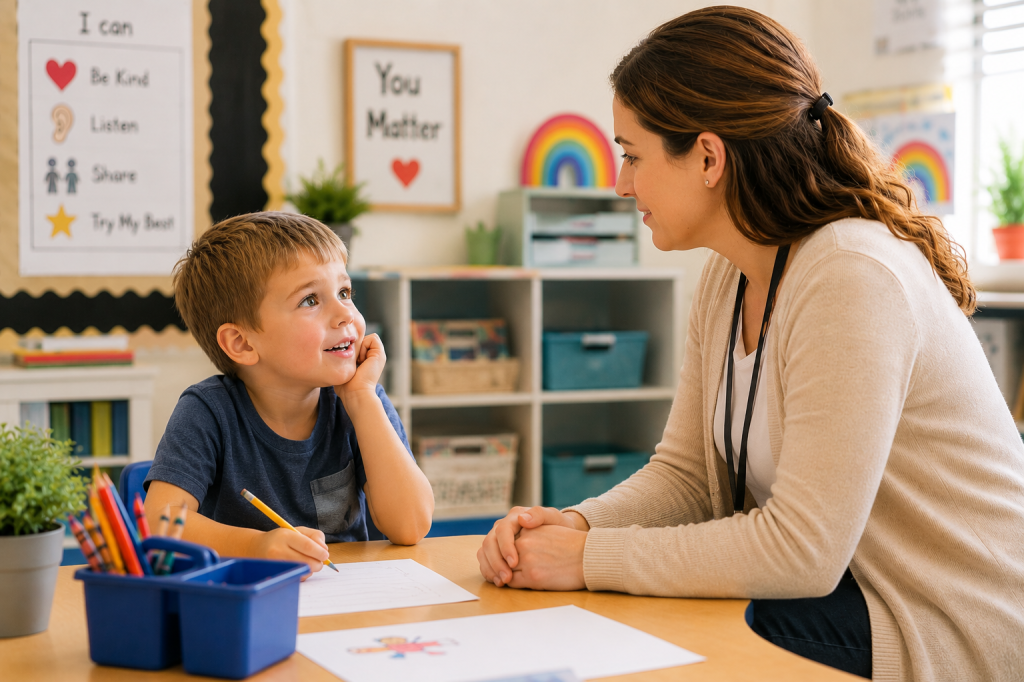
Teachers want children to know that it is okay to ask questions and seek assistance when needed.
Some children struggle because they remain silent when confused, while others become frustrated before asking for help. Kindergarten teachers value children who are beginning to say:
- “Can you help me?”
- “I don’t understand.”
- “Can you show me again?”
- “I need help with this.”
Kindergarten teachers want children to know that it is okay to ask for help when they need it. Throughout the school day, children will encounter new tasks, directions, and challenges that may feel difficult or unfamiliar. Being able to communicate a need and seek assistance is an important skill that supports both learning and independence.
Some children become frustrated when they do not know how to complete a task, while others may hesitate to speak up when they are confused. Teachers appreciate children who are beginning to use simple phrases such as, “Can you help me?”, “I don’t understand,” or “Can you show me again?” These communication skills help children solve problems more effectively and build confidence in the classroom.
Families can encourage help-seeking skills by allowing children to try tasks independently while reminding them that asking for assistance is a positive and appropriate choice. When children learn to recognize when they need support and feel comfortable asking for it, they are better prepared to navigate new experiences and challenges in kindergarten.
5. Being Independent with Personal Needs
Teachers care deeply about students, but they cannot provide one-on-one assistance throughout the day.
Before kindergarten, it helps if children can:
- Use the restroom independently
- Wash and dry hands
- Put on a coat
- Open simple lunch containers
- Clean up after themselves
- Manage basic belongings
Kindergarten teachers care deeply about helping children succeed, but they also support many students throughout the day. Children who can manage basic personal needs independently often feel more confident and are better able to participate in classroom activities.
Before kindergarten, it is helpful if children are beginning to use the restroom independently, wash and dry their hands, put on and remove outerwear, open simple lunch containers, and clean up after themselves. They should also have some experience keeping track of personal belongings such as backpacks, water bottles, and folders.
These everyday skills may seem small, but they play an important role in helping children navigate classroom routines successfully. Families can build independence by encouraging children to complete age-appropriate tasks on their own, offering guidance when needed, and allowing extra time for practice. As children become more capable of managing their personal needs, they develop confidence, responsibility, and a greater sense of readiness for kindergarten.
6. Coping with Small Disappointments
Not everything will go according to plan in kindergarten, and learning to handle small disappointments is an important part of becoming school-ready. A child may not get the color marker they wanted, may have to wait for a favorite activity, or may not be paired with their first-choice friend. These everyday situations provide valuable opportunities to practice flexibility and resilience.
Teachers understand that children will feel disappointed at times. However, they hope children are beginning to cope with frustration without becoming completely overwhelmed. Skills such as accepting “no” for an answer, trying again after making a mistake, waiting patiently, or choosing an alternative activity can help children navigate classroom challenges more successfully.
Parents and teachers can support coping and understanding frustration by providing simple phrases.
Helpful phrases include:
- “Maybe next time.”
- “I can choose something else.”
- “Let’s try again.”
- “That’s okay.”
Families can support this skill by allowing children to experience minor disappointments in a safe and supportive environment rather than immediately solving every problem for them. Helping children talk about their feelings, brainstorm solutions, and practice positive self-talk teaches them that disappointment is a normal part of life and that they are capable of working through it. These experiences build resilience, confidence, and the perseverance needed for success in kindergarten and beyond.
7. Listening During Group Activities
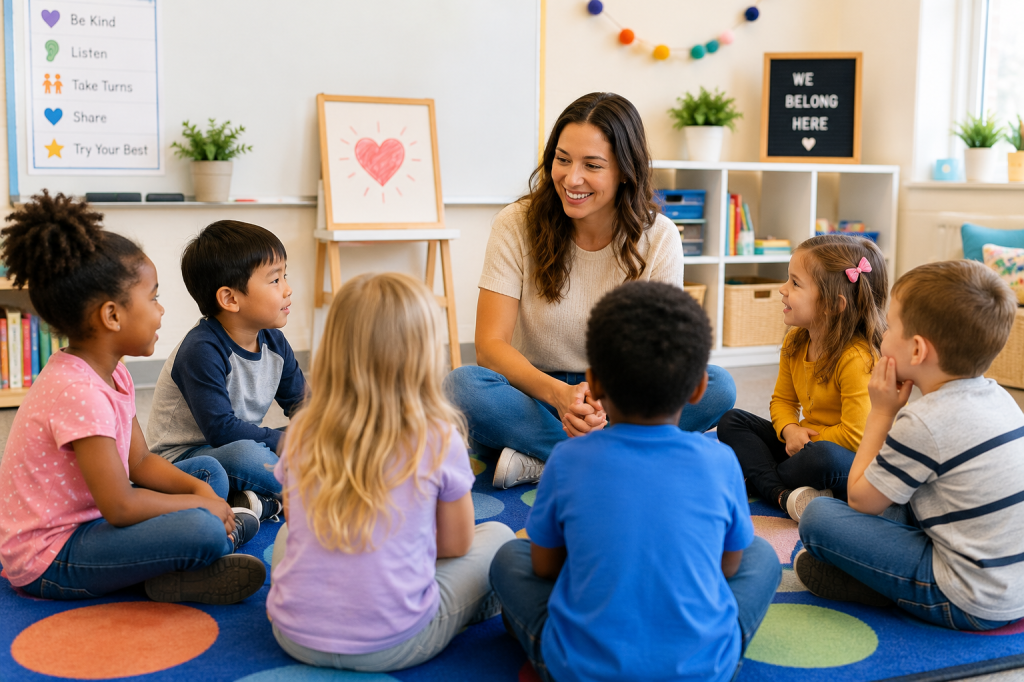
Circle time, story time, and classroom discussions are important parts of the kindergarten day.
Children are not expected to sit perfectly still for long periods, but teachers appreciate when children are beginning to:
- Focus on a speaker
- Participate appropriately
- Keep hands to themselves
- Stay with the group
- Follow classroom routines
Reading books together, attending library programs, and participating in family conversations can strengthen these skills.
8. Building Friendships
Kindergarten is often a child’s first experience navigating friendships within a larger peer group.
Teachers value children who are learning to:
- Introduce themselves
- Join play appropriately
- Use kind words
- Include others
- Work through simple disagreements
Friendship skills take practice and continue to develop throughout childhood.
What About Letters, Numbers, and Academic Skills?
Academic skills are certainly valuable, but most kindergarten teachers can teach children letters, numbers, and early literacy concepts. It is often more difficult to teach self-regulation, persistence, cooperation, and independence if children have had limited opportunities to practice them before school begins.
Kindergarten classrooms are designed to teach and strengthen academic concepts. Teachers introduce letter sounds, counting skills, early reading strategies, and problem-solving activities throughout the school year. What often makes the biggest difference in a child’s success is their ability to participate in learning, follow routines, ask for help, and persevere when tasks become difficult.
This does not mean families should ignore academics. Reading together, exploring books, counting everyday objects, and engaging in playful learning activities are wonderful ways to prepare for school. However, it is important to remember that kindergarten readiness is about the whole child. When children enter school with a foundation of confidence, curiosity, independence, and emotional regulation, they are well positioned to learn and grow academically throughout the year.
Every child develops at their own pace, and no child will master every skill before the first day of kindergarten. The goal is not perfection, but rather helping children build the skills and confidence needed to approach new experiences with a willingness to learn.
Final Thoughts
Kindergarten readiness is about much more than academics. The skills that help children thrive in school often include emotional regulation, independence, communication, cooperation, and resilience.
By focusing on these everyday life skills, families can help children walk into kindergarten feeling confident, capable, and ready to learn.
Remember, successful kindergarten students are not necessarily the children who know the most letters or numbers. They are often the children who can navigate challenges, build relationships, and keep trying when things become difficult.
 The Intentional Classroom Co
Leave a comment