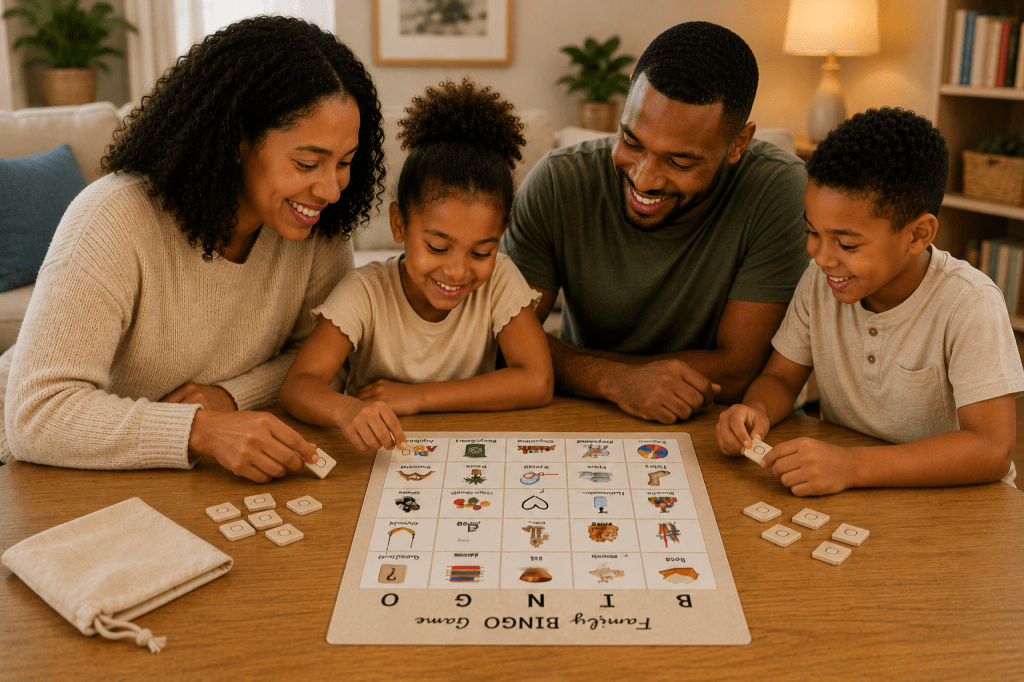
Family engagement is one of the most powerful ways to support young children’s learning and development. When families and educators work together, children feel more secure, confident, and supported both at school and at home. In early childhood education, strong home-school connections help children build social-emotional skills, strengthen language development, and create consistency in routines and expectations.
The good news is that family engagement does not need to be complicated. Simple, intentional tools can make a meaningful difference in helping families stay connected to what children are learning in the classroom.
Why Family Engagement Matters
Young children learn best when the important adults in their lives work together. When families understand classroom goals and activities, they are better able to reinforce learning naturally at home.
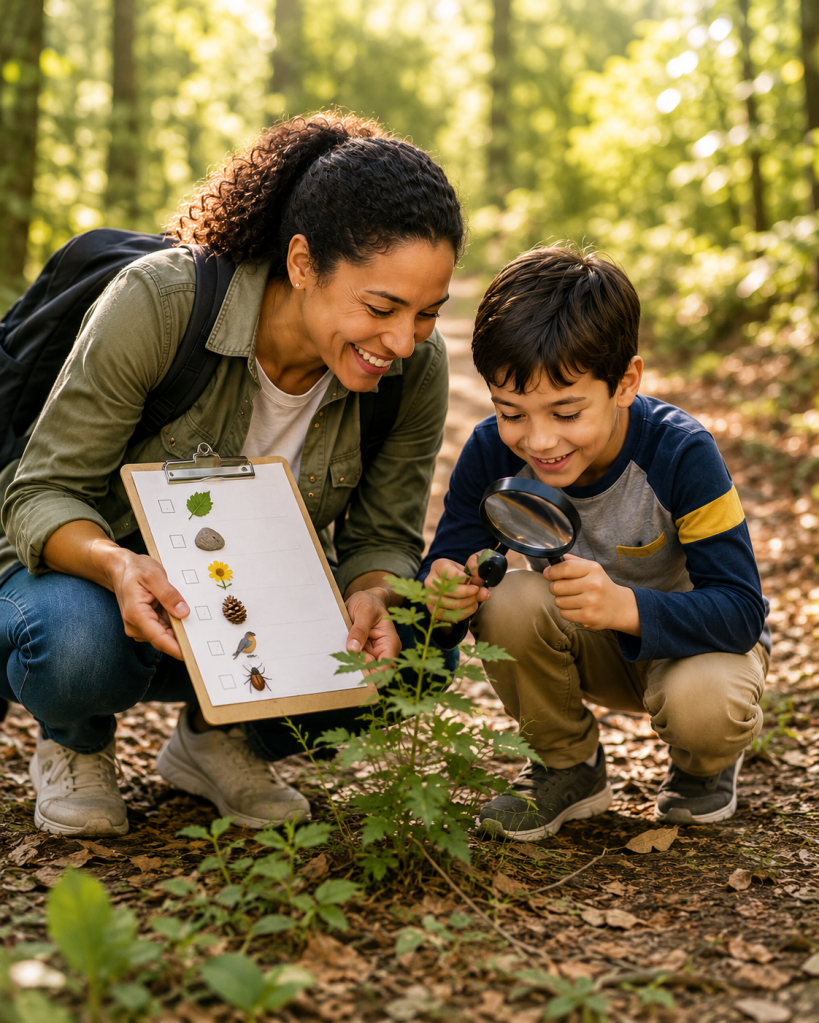
- Build stronger language and communication skills
- Develop positive social-emotional skills
- Increase confidence and independence
- Improve problem-solving abilities
- Strengthen relationships with teachers and caregivers
- Feel a greater sense of belonging and security
Benefits of Family Engagement in Early Childhood
1. Improves Academic Success
When families are involved in their child’s education, children tend to develop stronger language, literacy, and early math skills. Activities such as reading together, talking about daily experiences, and participating in learning activities reinforce classroom learning at home.
2. Supports Social-Emotional Development
Family engagement helps children build confidence, emotional regulation, and positive relationships. Children feel more secure when they see important adults in their lives working together and communicating regularly.
Research consistently shows that family involvement can help children:
3. Strengthens Communication Between Home and School
Open communication allows teachers and families to share important information about a child’s strengths, interests, needs, and progress. This collaboration helps educators provide more individualized support.
4. Encourages Positive Behavior
When expectations are consistent between home and school, children better understand routines, boundaries, and appropriate behaviors. Families and teachers can work together to address challenges and celebrate successes.
5. Builds a Sense of Belonging
Family involvement helps children feel valued and connected to their learning community. When families participate in school activities, children develop a stronger sense of identity and belonging.
6. Promotes Long-Term Educational Success
Research shows that family engagement during the early years is linked to improved attendance, higher academic achievement, stronger motivation, and greater success throughout a child’s educational journey.
Family engagement also helps educators better understand each child’s culture, routines, strengths, and individual needs.
Making Family Engagement Simple
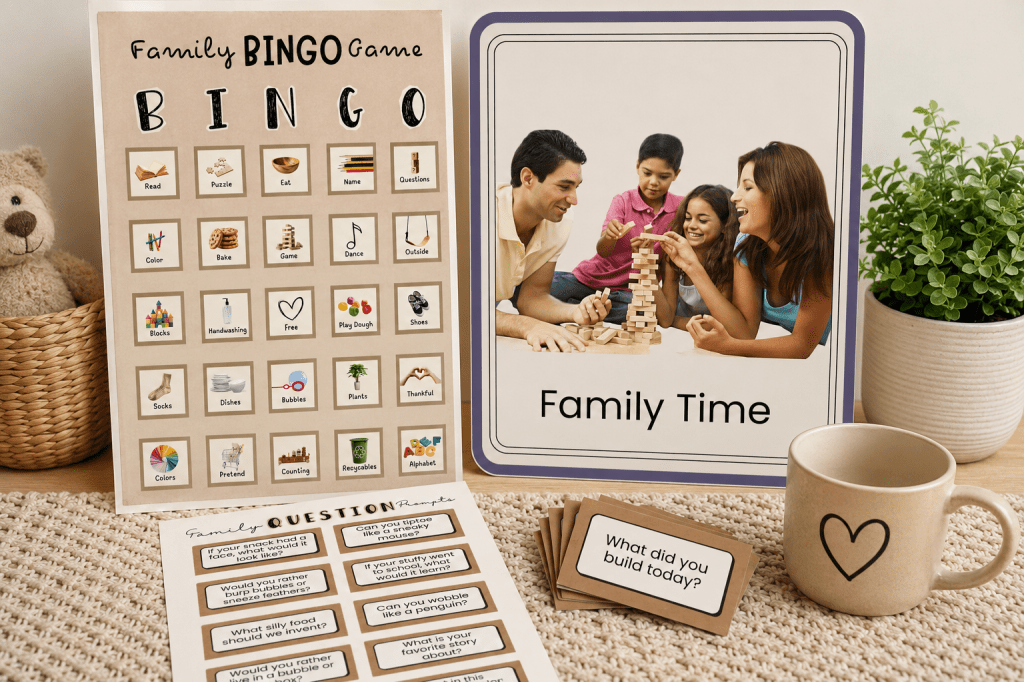
Many families want to support learning at home but may not know where to start. Busy schedules, work demands, and everyday responsibilities can make involvement feel overwhelming. That is why easy-to-use tools are so important.
Simple family engagement tools can include:
Conversation Cards
Using Conversation Cards to Make Family Engagement Simple
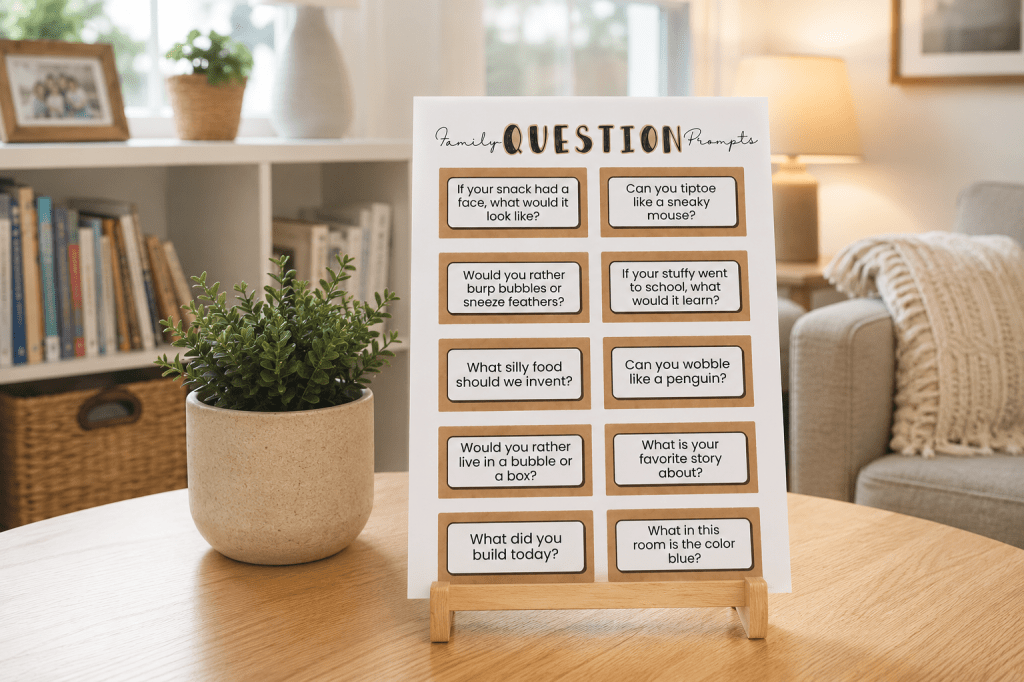
One of the easiest ways to encourage meaningful family engagement at home is through conversation cards. These simple question prompts help families connect, communicate, and learn together without requiring extra preparation or materials.
Conversation cards can be used during dinner, in the car, at bedtime, or anytime families have a few minutes to talk. Rather than asking children, “How was your day?” and receiving a one-word answer, conversation cards encourage deeper discussions that build language, critical thinking, and social-emotional skills.
Benefits of Conversation Cards
Encourage Meaningful Conversations
Open-ended questions help children share their thoughts, feelings, experiences, and ideas in ways that strengthen family relationships.
Build Language and Communication Skills
As children explain their answers, they practice vocabulary, sentence structure, listening skills, and conversational turn-taking.
Support Social-Emotional Development
Questions about emotions, friendships, kindness, and problem-solving help children develop self-awareness, empathy, and emotional regulation skills.
Create Consistent Family Connections
Using just one or two cards each day can establish a simple routine that brings family members together and encourages positive interactions.
Promote Critical Thinking
Many prompts encourage children to reflect, imagine, predict, and explain their reasoning, helping develop important cognitive skills.
Easy Ways to Use Conversation Cards at Home
- Pick one card during dinner each evening.
- Keep a stack in the car for conversations during errands or activities.
- Use a card as part of a bedtime routine.
- Choose a “Question of the Day” for the whole family to answer.
- Place cards in a jar and let children draw one randomly.
- Use cards during family game nights or gatherings.
Sample Conversation Prompts
- What made you smile today?
- If you could invent anything, what would it be?
- What is something kind you did for someone recently?
- What would make tomorrow a great day?
- What is your favorite family memory?
- If you could learn any new skill, what would you choose?
- What does being a good friend mean to you?
- What is something you are proud of?
Why They Work
Conversation cards make family engagement accessible for busy families because they remove the pressure of coming up with questions and planning activities. In just a few minutes each day, families can strengthen communication, support children’s development, and create meaningful moments together. Small conversations often lead to the biggest connections, helping children feel heard, valued, and supported both at home and at school.
Visual Schedules
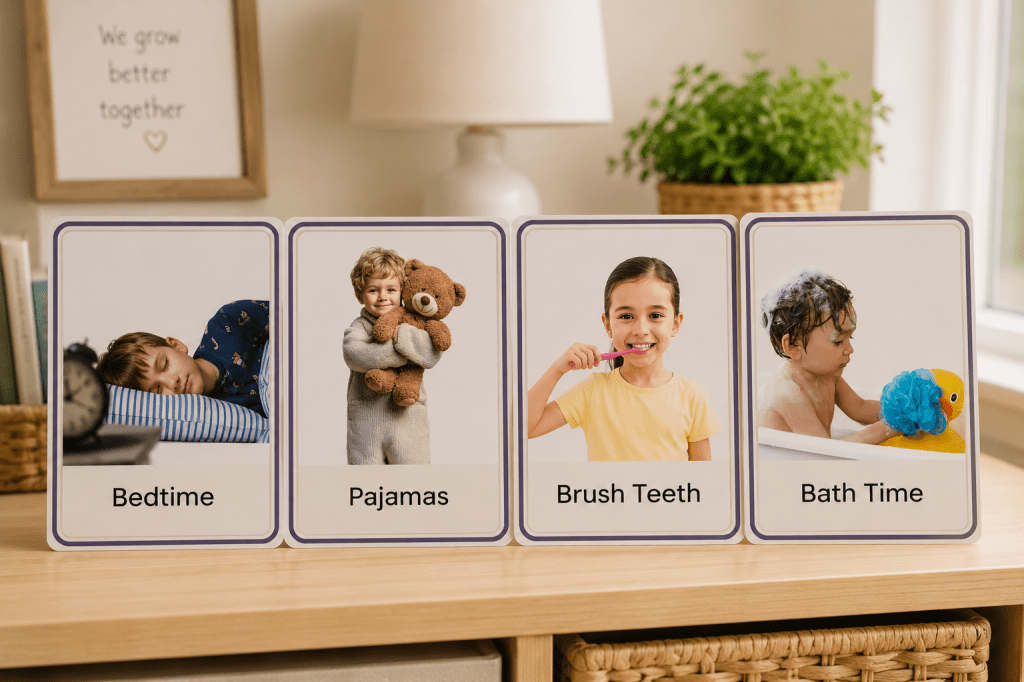
Using Visual Schedules to Support Family Engagement at Home
Visual schedules are a simple yet powerful tool that helps children understand daily routines, build independence, and reduce stress during transitions. By using pictures, symbols, or photographs to represent activities throughout the day, families can create predictable routines that help children feel confident and successful.
For young children, routines can sometimes feel overwhelming when they are communicated only through words. A visual schedule provides a clear picture of what is happening now and what comes next, making expectations easier to understand and follow.
Benefits of Visual Schedules
Promote Independence
Children can follow their routine with less adult prompting, allowing them to take ownership of daily tasks such as getting dressed, brushing teeth, cleaning up, and preparing for bedtime.
Reduce Stress and Anxiety
Knowing what to expect helps children feel secure and prepared for transitions. Visual schedules can be especially helpful during busy mornings, after-school routines, and bedtime.
Support Communication and Understanding
Pictures provide visual cues that help children process information, making routines easier to understand and remember.
Encourage Responsibility
Children enjoy checking off completed tasks or moving schedule pieces as activities are finished. This helps build a sense of accomplishment and responsibility.
Create Consistency Between Home and School
When families use visual schedules at home, children experience similar supports they may see in preschool or kindergarten classrooms, helping create consistency across environments.
Hands-On Learning Activities
Hands-On Learning Activities at Home
Learning doesn’t have to involve worksheets or complicated projects. Simple, hands-on activities help children build problem-solving, creativity, language, and early academic skills while spending quality time with family.
Easy Ideas to Try at Home
Cooking Together
Practice counting, measuring, following directions, and learning new vocabulary while preparing meals or snacks.
Scavenger Hunts
Search for objects by color, shape, letter, or category to encourage observation and critical thinking.
Building Challenges
Use blocks, cups, cardboard, or recycled materials to create towers, bridges, or imaginative structures.
Nature Exploration
Take a walk, collect leaves or rocks, observe insects, and talk about what you discover together.
Simple Science Activities
Try sink-or-float experiments, grow seeds, mix colors, or explore baking soda and vinegar reactions.
Art and Creative Projects
Provide open-ended materials like paper, paint, markers, or recycled items for children to create and express themselves.
Why It Matters
Hands-on learning helps children learn through exploration and play. These simple activities encourage curiosity, strengthen family connections, and turn everyday moments into meaningful learning opportunities.
Building Strong Relationships With Families
Family engagement is not only about sending home activities. It is also about building trusting, respectful relationships with families.
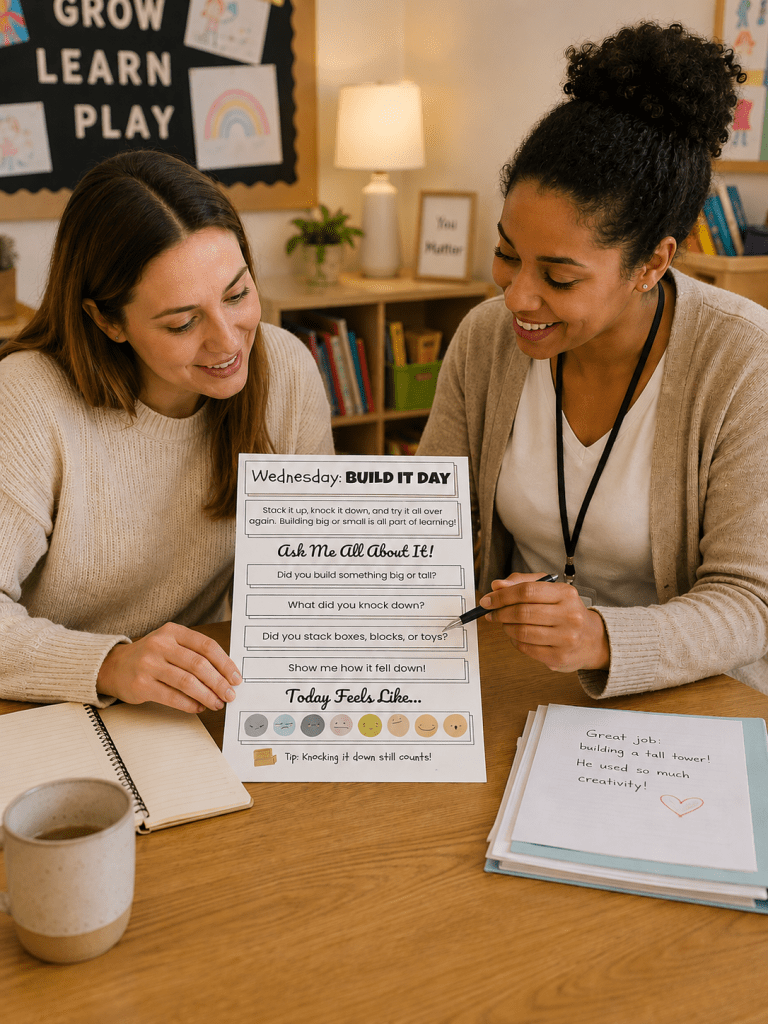
Strong teacher–parent relationships create a partnership that helps children feel supported, valued, and successful both at home and at school. When families and educators communicate openly and work together, children benefit academically, socially, and emotionally.
Building positive relationships starts with consistent communication, mutual respect, and a shared commitment to supporting each child’s growth. Simple actions such as sharing updates, celebrating successes, discussing concerns early, and listening to one another help establish trust and collaboration.
Ways to Strengthen Teacher–Parent Partnerships
- Communicate regularly through conversations, emails, apps, or newsletters.
- Share positive moments and accomplishments, not just concerns.
- Listen to each other’s perspectives and insights about the child.
- Respect family cultures, values, and experiences.
- Work together to set goals and support learning at home and school.
- Participate in family events, conferences, and classroom activities when possible.
Why It Matters
When teachers and families build strong relationships, children experience greater consistency, confidence, and support. They are more likely to develop positive attitudes toward learning, stronger social-emotional skills, and a sense of belonging within their school community. By working together, teachers and families create a foundation for lifelong success.
Intentional Family Engagement Creates Stronger Learning Connections
Children benefit most when home and school feel connected. By providing simple, supportive tools, educators can help families feel confident participating in their child’s learning journey.
Family engagement does not have to be elaborate to be effective. Meaningful conversations, visual supports, and playful learning opportunities can strengthen relationships and help children thrive both inside and outside the classroom.
At The Intentional Classroom Co., we believe in creating calm, intentional resources that make learning feel approachable for both educators and families. Small connections create lasting impact — and family engagement is where those connections begin.
 The Intentional Classroom Co
Leave a comment