Introduction
Creating a calm-down corner has become common in early childhood classrooms, but many of these spaces fail to support children as intended.
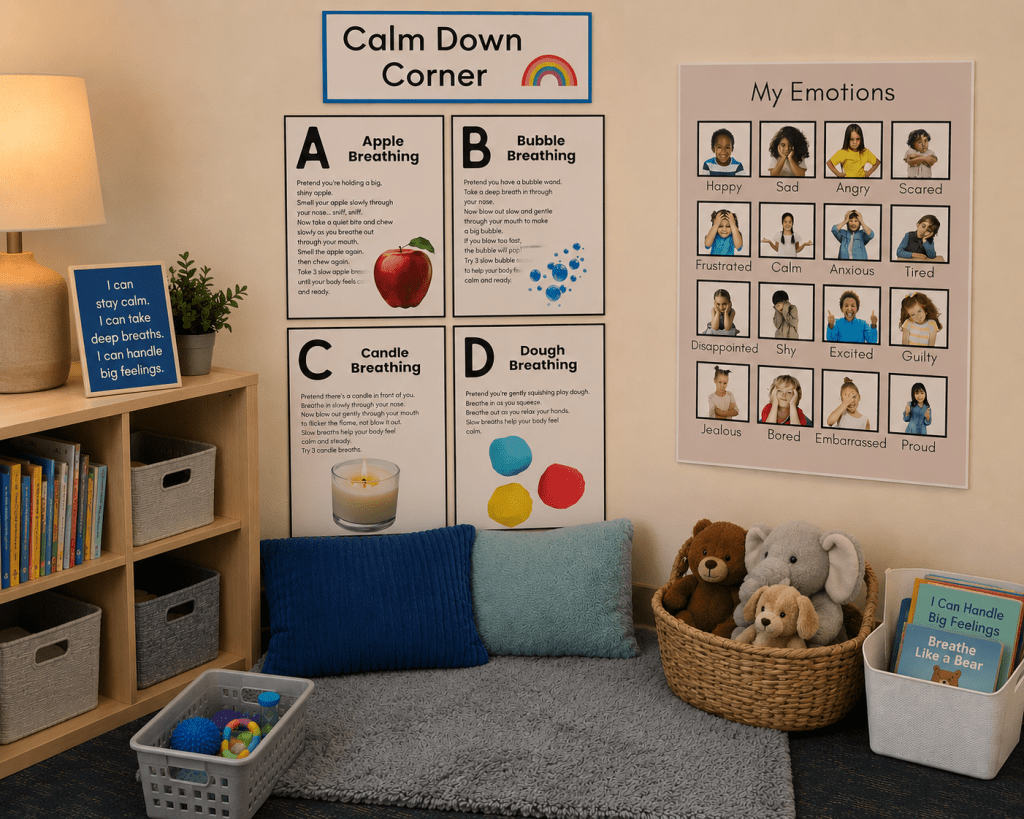
A calm-down corner is not simply a quiet area filled with soft items and aesthetically pleasing visuals. They are not meant to brighten the room or serve as an impromptu nap area. It is actually an intentionally designed space that supports emotional regulation, language development, and independence.
When thoughtfully implemented, a calm-down corner can become a valuable teaching tool—not a place children are sent when their behavior becomes challenging. AKA, not ever a time-out area.
What a Calm Down Corner Really Is
A calm-down corner is a regulated space for co-regulation and self-regulation, not isolation.
Young children are still developing their executive functioning skills. So what does that mean? A child’s executive functioning skills are the “management system” of the brain that help them plan, focus, remember instructions, regulate emotions, and adapt to challenges. The ongoing development of these skills is why we all need a calm-down area. Children need a safe space to feel their emotions and understand the “what” and “why” of what they are experiencing.
Providing tools and a structured space for children helps them process their emotions. They need time and calm to tap into that management system or their executive functioning skills to focus and regulate their body and mind.
The calm space should support children in:
- Emotional regulation
- Self-awareness
- Problem-solving
- Social-emotional learning
- Independence
It should never feel like a consequence. It is not a timeout. Instead, the calm-down corner should feel like a cozy, safe space where a child can express their emotions constructively.
Why Many Calm Down Corners Don’t Work
Calm down corners often do not work because they are set up as a space, but not taught as a skill. The calm corner can be beautiful and look warm and inviting; however, it should not be set up for aesthetic purposes. There needs to be an understanding of how and why to use the area with the children; otherwise, you have a pretty, but useless, space in your classroom.
A calm-down corner is only effective when children are explicitly taught how, when, and why to use it. Many teachers create a wonderful space, but children still avoid it, misuse it, or escalate emotionally because the regulation skills themselves have not yet been developed. So why is that, and how do you avoid it?
It Feels Like a Punishment
If children are sent there only after getting in trouble, they begin to associate the space with shame or consequences instead of support. A child should not be “sent” to a calm-down corner. Instead, they should independently choose to regulate their emotions in the classroom designated for that purpose.
For example, a child is sad after being dropped off for the day. Instead of saying, “You need to go to the calm-down corner until you are done crying”, which is honestly quite harsh, you could say, “I see you are feeling sadness. Would you like to calm your body on the soft pillows? You can cuddle a stuffy until you feel comfortable and ready to join us. I am here if you need anything.” Much better. More sensitive and in tune with that child’s needs. You are now using the calm-down corner as a place for comfort and understanding, not a place to “cry it out” until they are ready to join the group.
A calm-down corner should be presented as:
- a tool
- a safe space
- available to everyone
- used proactively, not only reactively
Children Were Never Taught How to Use It
Many adults assume children naturally know how to calm themselves. This is not the case! Children need to be taught how to regulate their emotions. The most effective way to teach this skill to a child is by modeling the behavior.
Children need direct modeling, such as:
- How to breathe slowly
- How to identify feelings
- How to choose a calming strategy
- How to recognize when their body feels overwhelmed
Without instruction, children may:
- play with the materials
- avoid the area
- become more dysregulated
During a circle time or small group activity, introduce the calm corner and demonstrate how to use it. Walk through each item and discuss how they are used to regulate emotions.
The Space Is Overstimulating
Sometimes less is more. When a child seeks a calm-down area, they are looking to regulate their emotions, not escalate due to too many choices and overstimulation.
Avoid these in a calm-down area:
- bright colors
- too many visuals using cartoons
- noisy toys
- clutter
- flashing sensory items
Any or all of these can be overwhelming to a child who is already escalated. The goal is to regulate, not increase dysregulation.
Only Utilized During Big Emotions
The best time to practice calm strategies is when a child is calm.
It is highly ineffective to tell a child in the throes of a major feeling event to “breathe” when they have never been taught how to deep breathe for regulation. It will never work. Instead, during group time or a small-group activity, talk about different breathing methods and teach when and how to use them appropriately.
Repetition and practice are essential when teaching these skills. If you repeat yourself enough, it will click. Keep in mind that it takes a child, on average, two weeks to learn and utilize a new skill, so don’t give up. Just keep practicing the skill, and eventually, they will start using it as a tool in their regulatory toolkit.
In many classrooms, calm-down corners are created with good intentions, but lack clarity and purpose. Avoid this common mistake, and create a routine that incorporates the space for effective use.
What to Include (And Why It Matters)
A calm-down area should include simple, intentional tools. The goal is not to entertain-it is to support and regulate emotions.
Soft Seating
Examples:
- Floor pillows
- Bean bag chair
- Soft rug
- Cushion or pouf
Why it matters:
Soft, comfortable spaces help children feel physically safe and grounded. A cozy environment lowers stress and creates a sense of security.
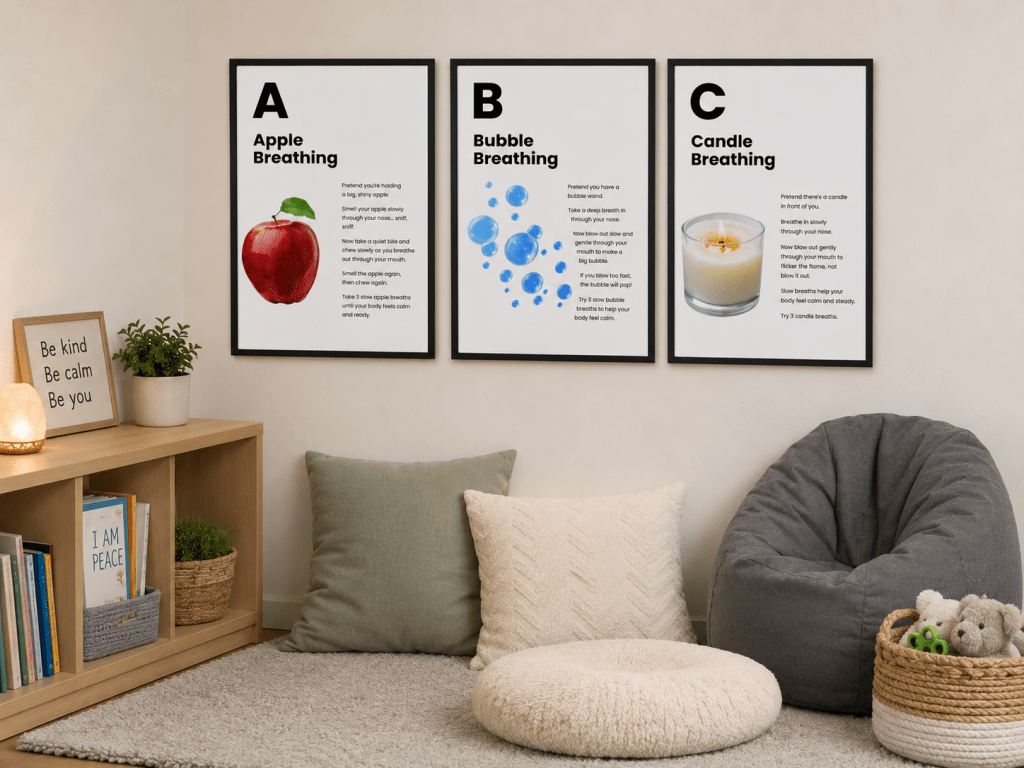
Breathing Visuals
Examples:
- ABC Breathing prompt
- “Smell the flower, blow the candle” prompts
Why it matters:
Young children need visual, concrete reminders of how to calm their bodies. Breathing strategies help slow heart rate, regulate emotions, and support self-control.
Feelings or Emotion Visuals
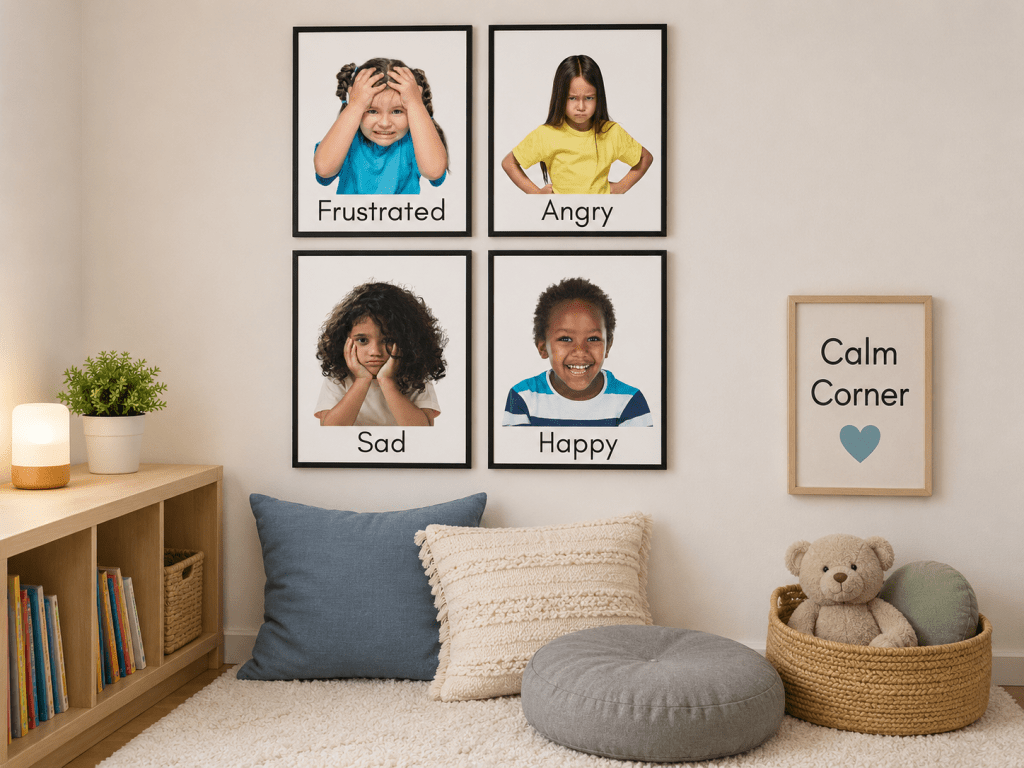
Examples:
- Emotion posters
- Feelings cards
- Mood check-in chart
- Real photographs showing facial expressions
Why it matters:
Children cannot regulate emotions they cannot identify.
Emotion visuals help children:
- build emotional vocabulary
- recognize body feelings
- increase self-awareness
- communicate needs safely
Real images are more effective than cartoons because they are often more engaging. Children connect more naturally to authentic facial expressions.
Comfort Items
Examples:
- Stuffed animals
- Weighted lap pad
- Soft blanket
- Sensory pillow
Why it matters:
Comfort items provide calming sensory input and emotional reassurance, especially for children experiencing stress or overwhelm.
Sensory Tools or Fidgets
Examples:
- Pop-it toys
- Stress balls
- Calm bottles
- Stretch bands
- Tactile objects
Why it matters:
Some children regulate through movement or sensory input. Fidgets can help release tension and improve focus when used intentionally.
However, be mindful of avoiding the trap of too many sensory items. Figure out, through trial and error, which fidgets are most effective and which are used most. Just keep two to three on hand so they don’t overwhelm and become items to play with.
Books About Feelings
Examples:
- Emotion-focused picture books
- Mindfulness books
- Stories about coping skills
Why it matters:
Books help children:
- understand emotions
- See problem-solving modeled
- normalize big feelings
- develop empathy
Neutral, Calm Design
Keep your calm, keep the area neutral, and keep it clean. The items should be well-organized and intentional. Just keep a few of each listed item in the area and ensure that they complement one another.
Why it matters:
Overstimulating environments can increase dysregulation. Calm, intentional spaces help children feel emotionally safe and focused.
Why Real Images Are More Effective
Many classroom materials rely on cartoon visuals. While visually appealing, they can limit understanding.
Real images:
- Reflect authentic emotional expressions
- Support stronger language connections
- Reduce visual overstimulation
For young children, especially those developing language, real visuals create clearer meaning.
Simple Tools That Support Regulation
A calm down corner doesn’t require expensive or complex materials. The most effective tools are simple, clear, and purposeful.
If you’re building a calm, intentional space, start with resources that support:
- Emotion identification
- Clear visual prompts
- Simple regulation strategies
Explore Calm Down Corner Tools → Calm Postings
Conclusion
A calm down corner is not about creating a quiet space—it is about building a system that teaches children how to regulate.
When thoughtfully designed and intentionally taught, this space becomes a powerful part of the learning environment.
Simple, meaningful tools paired with consistent instruction can support children in developing skills they will use far beyond the classroom.
 The Intentional Classroom Co
Leave a comment