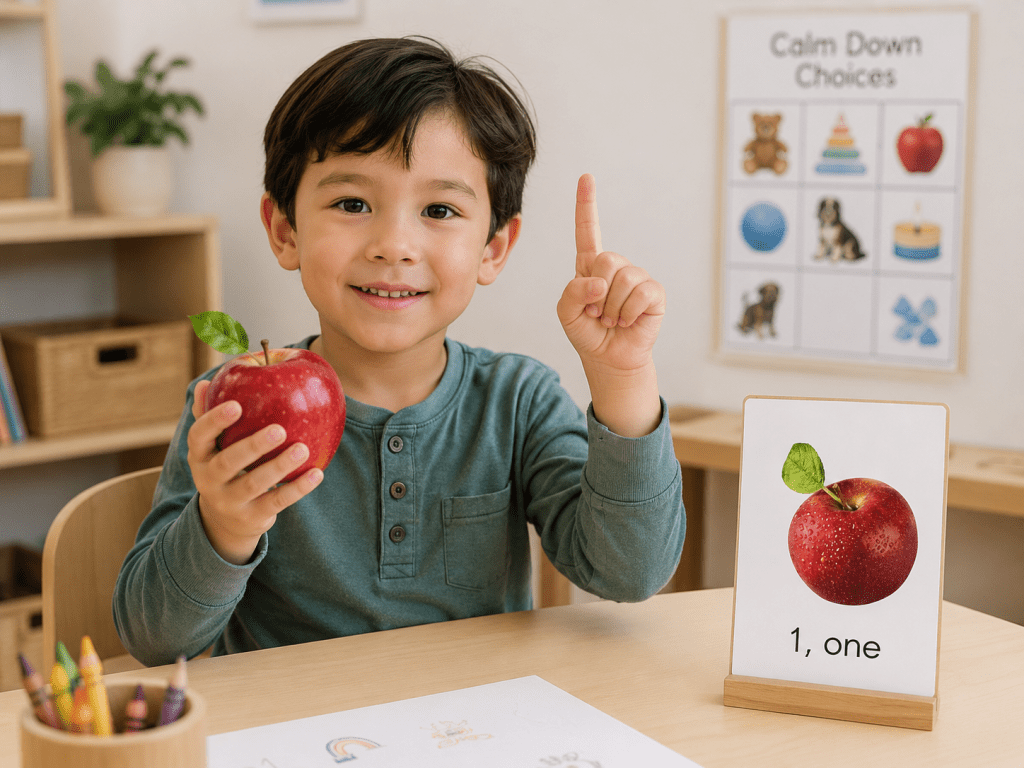
Preparing children for kindergarten can feel overwhelming. With so many expectations, it’s easy to wonder what actually matters most.
The good news is that school readiness isn’t about knowing everything—it’s about building a strong foundation of key skills that support learning, behavior, and confidence.
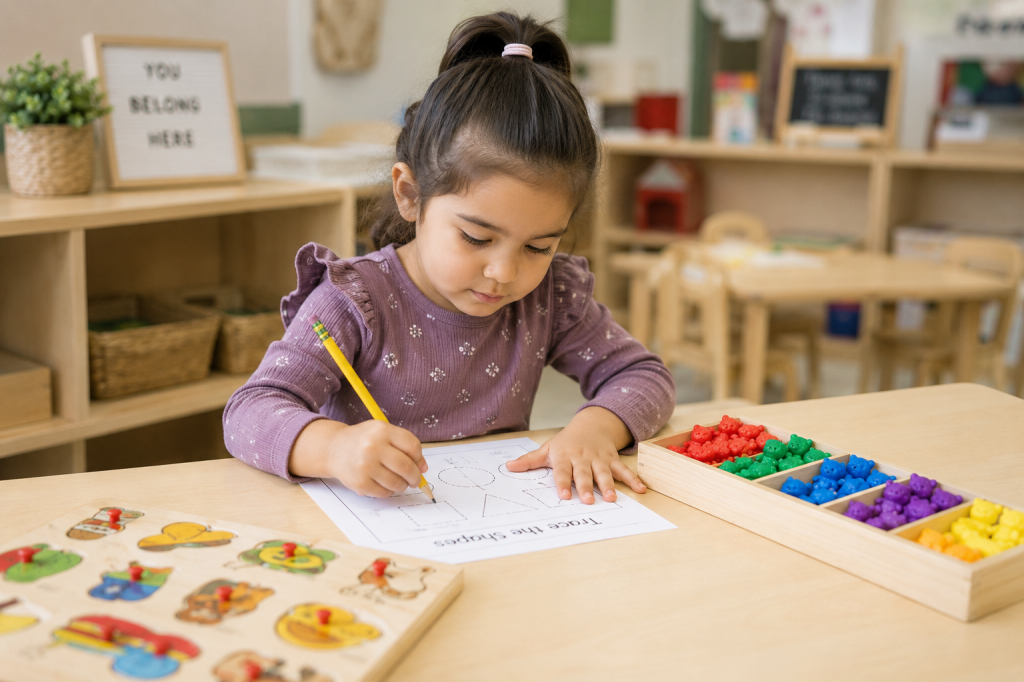
1. Language and Communication
Children need to be able to express their needs, understand directions, and engage in simple conversations.
Language is the foundation of a child’s learning. Having strong language skills is the catalyst for everything else that follows in kindergarten, including following directions, understanding math and science concepts, and developing early literacy skills (naturally).
Early literacy is a major predictor of future academic success. If a child has strong vocabulary skills, then it indicates that they will have greater success reading. Strong oral language, therefore, indicates better reading comprehension. The foundation of this understanding will be the child’s early literacy skills, an essential tool for future academic endeavors.
Having strong language skills also leads to fewer frustrations and challenging behaviors. When a child cannot adequately communicate their thoughts and feelings, their go-to is going to be whatever is quickest to convey them, i.e., hitting, pushing, yelling, etc. Being able to express thoughts and feelings will reduce outbursts and strengthen healthy, effective coping skills.
The best way to teach these skills to children is through everyday use and repetition.
Try the following:
- Narrate your day
“I am measuring one half a cup of flour.”
“First, we will put on socks, and then shoes.”
- Ask open-ended questions, but pause and allow 5-10 seconds for the answer
- Read a story interactively
- Engage with the child at their level
- Use real image visuals to convey lessons
Simple tools like open conversations, real images, and visual supports help children connect words to meaning more effectively.
2. Ability to Follow Directions
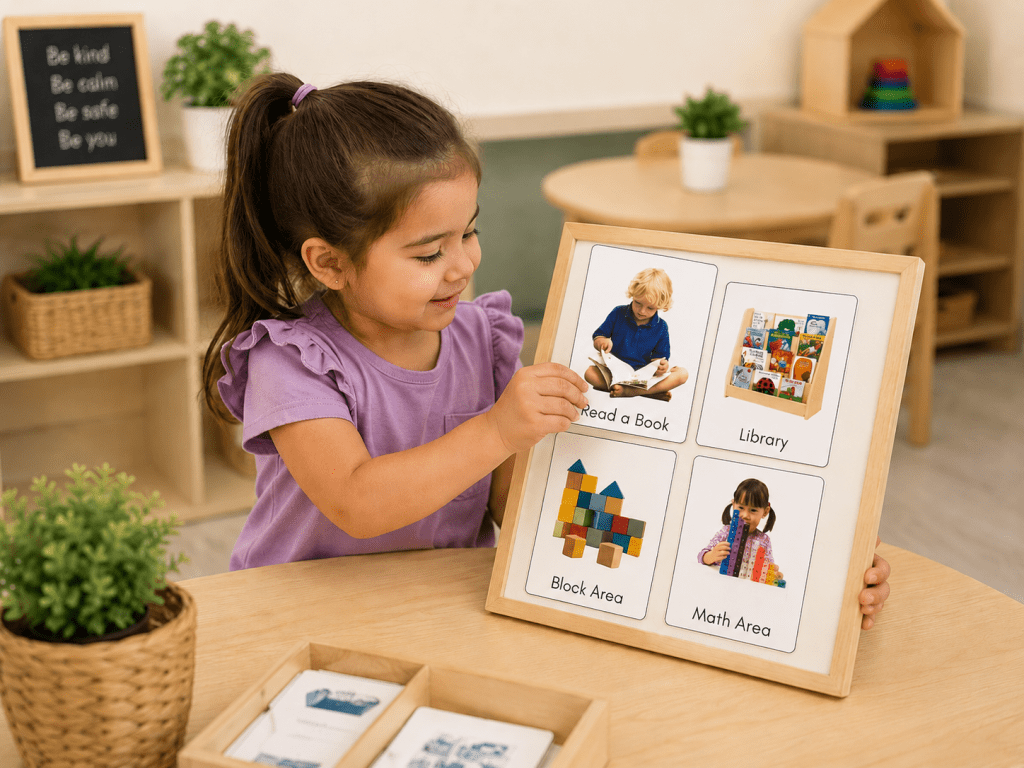
Kindergarten environments require children to listen and respond to instructions.
Kindergarten teachers will tell you that a consistent challenge they see with students entering their classrooms is their inability to sit through a lesson. When children lack listening skills and the ability to follow instructions, they cannot learn. Simple as that. Not only are kindergarten students expected to follow instructions, but they also need to follow multiple steps. This procedure may seem simple, but for many children it is not. Set students up for success by practicing the following:
- Give simple, clear directions using multiple steps
- Practice routines
- Keep expectations consistent
- Use First/Then visuals and boards
Breaking tasks into small steps helps children feel more successful. Boosting their self-esteem and confidence in following procedures will only bolster their abilities to thrive in kindergarten.
3. Social Skills
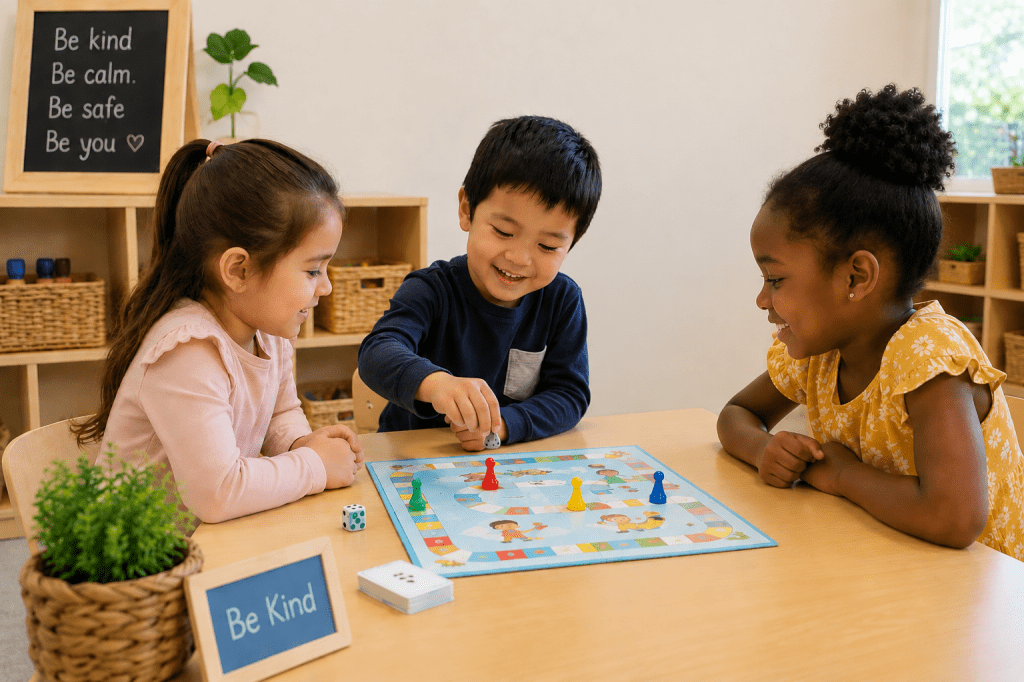
Children don’t need perfect behavior—but they do need basic social understanding.
In kindergarten, children are expected to take turns, share their materials with others, and have appropriate interactions with other students. Taking turns and sharing are complicated and sometimes difficult for children this age. Their little brains are still developing. At this age, a child is naturally egocentric, meaning the world is still revolving around them. This state of thinking is a normal part of their development. With that said, it puts a damper on easy sharing with others.
In addition to overcoming their egocentric thinking, kindergarteners are still developing their emotional skill set. If you have or are teaching kindergarteners, you no doubt have seen how big their emotions can be. Sharing something that they view as their own is not a small or simple task for them.
The most effective way to teach children these skill sets is to model the behavior. Try the following:
- Practice taking turns (board games are quite effective)
- Interact with social scripts
“Can I have a turn next?”
“I’m still using this.”
“Stop, I don’t like that.”
- Use visual timers to practice waiting and patience
These skills are built through everyday interactions and guided support. Repetition is key.
4. Emotional Regulation
Learning to manage emotions is one of the most important readiness skills, yet one of the greatest challenges for many children.
Emotional regulation is the ability to recognize, name, and manage feelings. This skill is all-encompassing, as the ability to regulate emotions supports high-quality learning experiences for children.
Once children enter kindergarten, they will be faced with social and emotional demands. They have to wait in lines, take turns, refrain from talking, and make friends. There are so many new expectations upon entering school, and it is so important that they can navigate with emotional regulation skills.
Educational settings across the board are seeing a significant increase in the number of children who are unable to regulate their emotions. Although we know this number is on the rise due to external factors, we also recognize that the inability to regulate is a learning gap. The good news is that children can learn emotional regulation when given the right tools and support. We can help close this gap.
Try the Following:
- Help identify and name feelings (use real images)
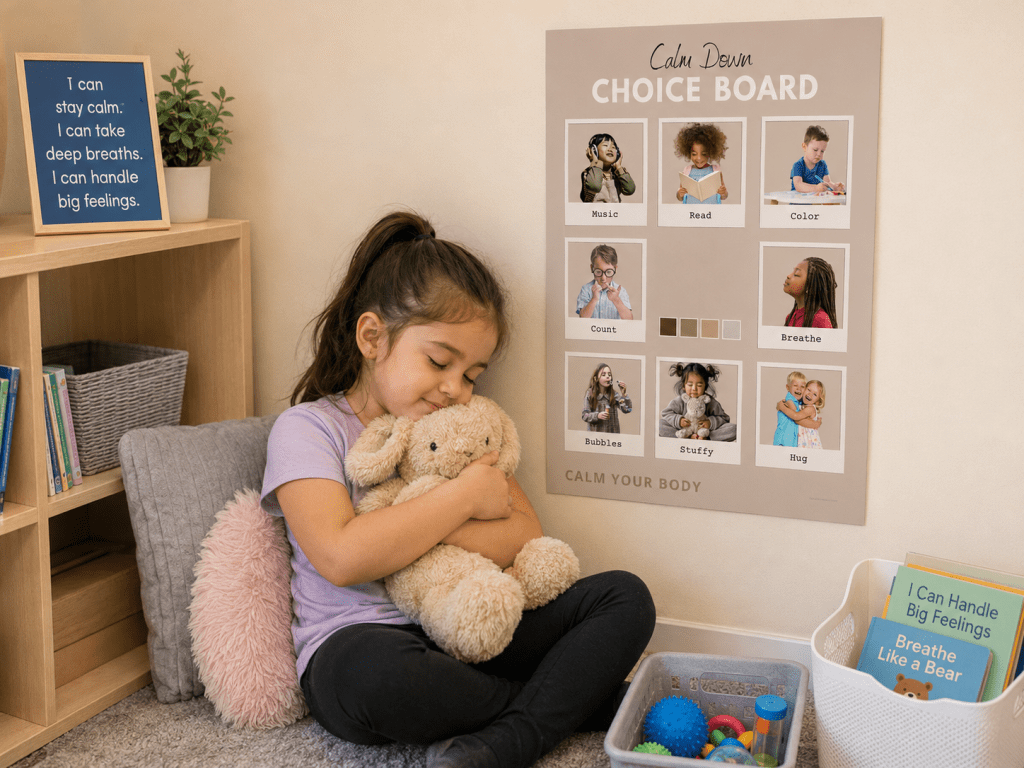
- Teach calming strategies-this must be done during a calm state
-Deep breathing
-Fidgets
-Utilizing a calm space
- Provide predictability through consistent schedules and routines
A calm environment and a calm adult play a big role in helping children regulate.
5. Early Literacy Foundations
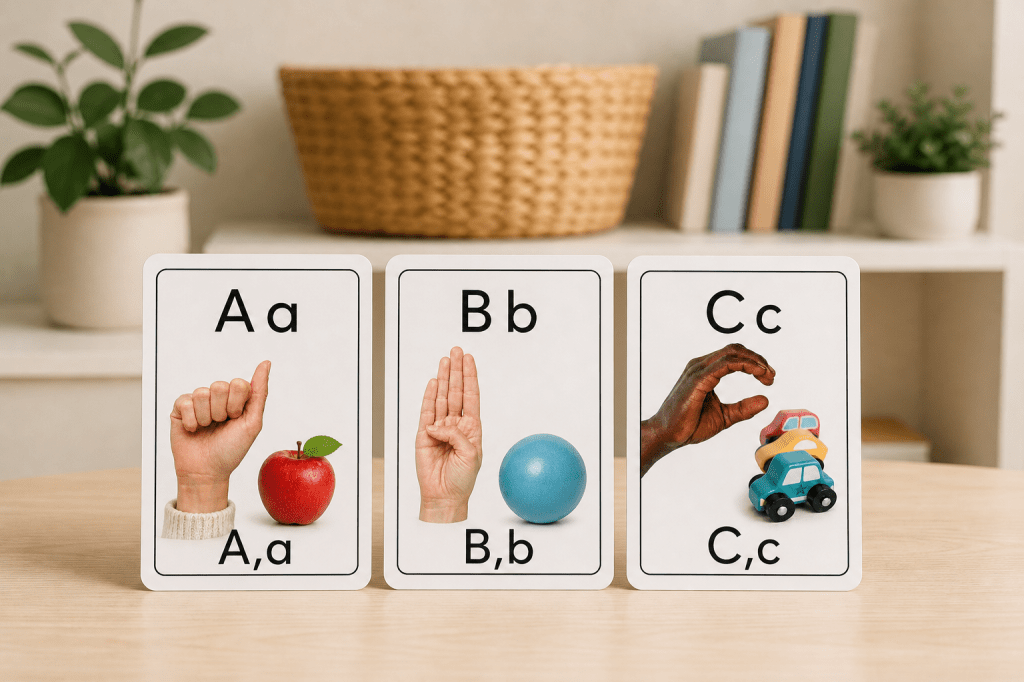
Early literacy skills include recognizing letters, understanding sounds, and beginning to connect print with meaning.
They are the building blocks that enable young students to read and write. These skills will shape how a child learns to read later in their education. Early literacy skills will support comprehension, build language development, and build school readiness and confidence.
Support early literacy by:
- Introducing letters gradually, starting with lowercase
- Using real images instead of cartoons
- Pairing visuals with language and movement
Simple, consistent exposure is more effective than overwhelming children with too much at once.
A Simple Way to Support These Skills
You don’t need complicated systems or overwhelming materials.
Using simple, intentional tools—like real image alphabet supports—can help build language, literacy, and confidence at the same time.
Final Thoughts
Kindergarten readiness isn’t about perfection. It’s about building the skills that help children feel confident, capable, and ready to learn.
When learning environments are calm, intentional, and focused, children are able to grow in meaningful ways.
 The Intentional Classroom Co
Leave a comment