Introduction
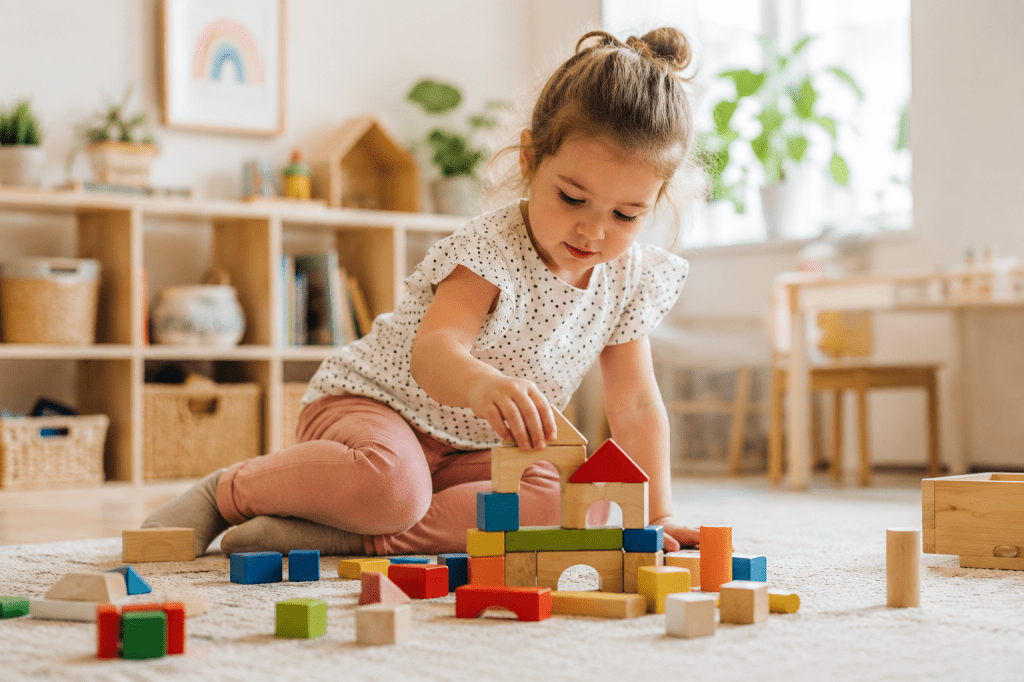
If you have ever walked into a classroom and seen students scattered about, engaged in various activities, children building block towers and knocking them over, cooking a meal in a pretend kitchen, or constructing an intricate castle out of magna-tiles, you are witnessing something pretty amazing: learning.
In a world filled with so many expectations, structures, and schedules, it can be easy to overlook one of the most important ways children learn: play.
Play is not simply a break from learning—it is learning. Through play, children explore new ideas, solve problems, develop relationships, practice communication, and make sense of the world around them. For young children, play provides the foundation for future academic, social, emotional, and physical success.
When we understand the power of play, we can create opportunities that support meaningful learning both at home and in the classroom.
What Is Play-Based Learning?
Play-based learning is an approach that allows children to learn through hands-on experiences, exploration, creativity, and interaction with others. Rather than focusing primarily on direct instruction or worksheets, children are given opportunities to actively engage with their environment and make meaningful discoveries through play.
Whether they are building a block tower, pretending to put their babydoll to bed, creating an artistic masterpiece, or exploring nature, children are developing important skills across all areas of development. Through these experiences, they practice communication, problem-solving, decision-making, cooperation, and critical thinking.
Play-based learning also encourages children to ask questions and explore the world around them. When children are actively involved in their learning, they are often more engaged, motivated, and likely to retain new information. By learning through play, children can make personal connections. They can relate to actions and items in their own lives, which provides them with the opportunity to gain a deeper understanding of their world. There are opportunities for learning everywhere; it is just a matter of understanding how to guide children into utilizing them to foster learning.
Most importantly, play allows children to develop a love of learning. As they explore, create, and discover, they build confidence in their abilities and develop the foundational skills needed for future success in school and beyond.
Why Children Learn Best Through Play
Kiddos are naturally curious. They learn best when they can touch, move, experiment, and explore. Play provides children with opportunities to actively engage with the world around them and make sense of it through their own experiences.
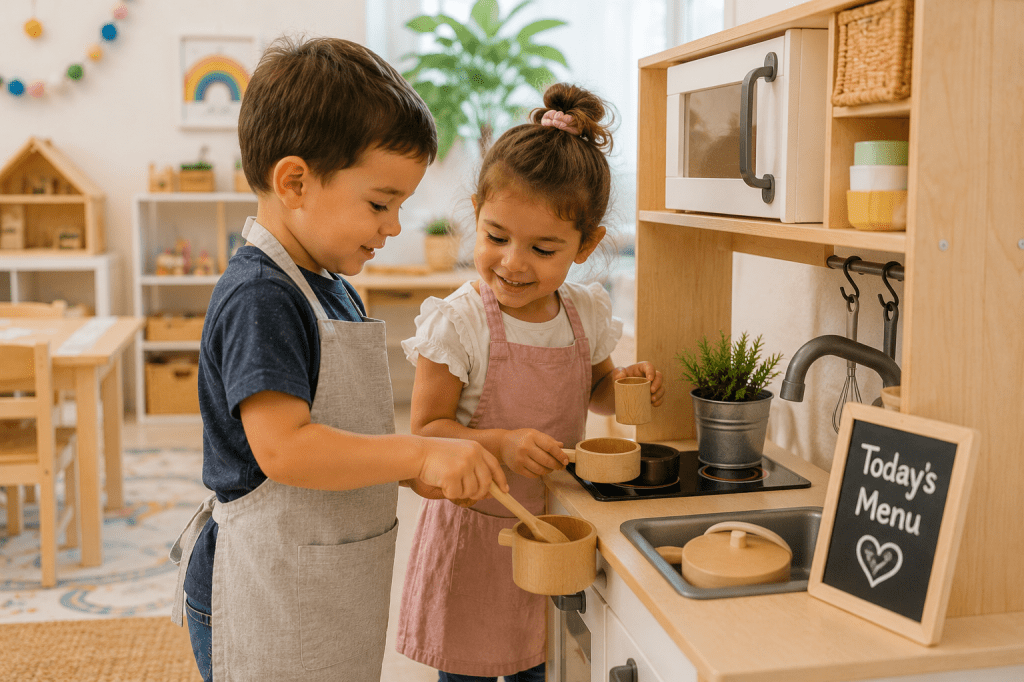
Play engages multiple areas of development simultaneously. A child building with blocks may be learning math concepts, developing fine motor skills, practicing problem-solving, and communicating with their friends- all by stacking blocks to create something amazing. Also, a child engaged in pretend play, such as cooking a meal or grocery shopping, may be strengthening language skills, creativity, social skills, and emotional understanding.
Because play is a fun and meaningful activity, children are often more motivated to stay engaged and work through challenges. Play encourages children to take risks, try something new, and learn from mistakes in a low-pressure environment. Rather than being given instructions for a task, children gain knowledge through their own experience, which deepens understanding and supports long-term learning.
Research consistently shows that children retain information more effectively when they are actively involved in the learning process. Through play, children build the foundation for future academic success while developing confidence, independence, and a lifelong love of learning.
Play Builds Language and Communication Skills
Children develop language through conversations, storytelling, pretend play, and social interactions.
When children engage in dramatic play, they practice expressing ideas, asking questions, negotiating roles, and using new vocabulary. Whether pretending to be a doctor, chef, teacher, or firefighter, children strengthen communication skills while expanding their understanding of the world.
These early language experiences help build the foundation for reading, writing, and future literacy success. Who thought that by playing dress-up, a child is building the blocks for their literacy foundation? Dress up: an activity that is both adorable and meaningful. Who knew?
Play Supports Social and Emotional Development
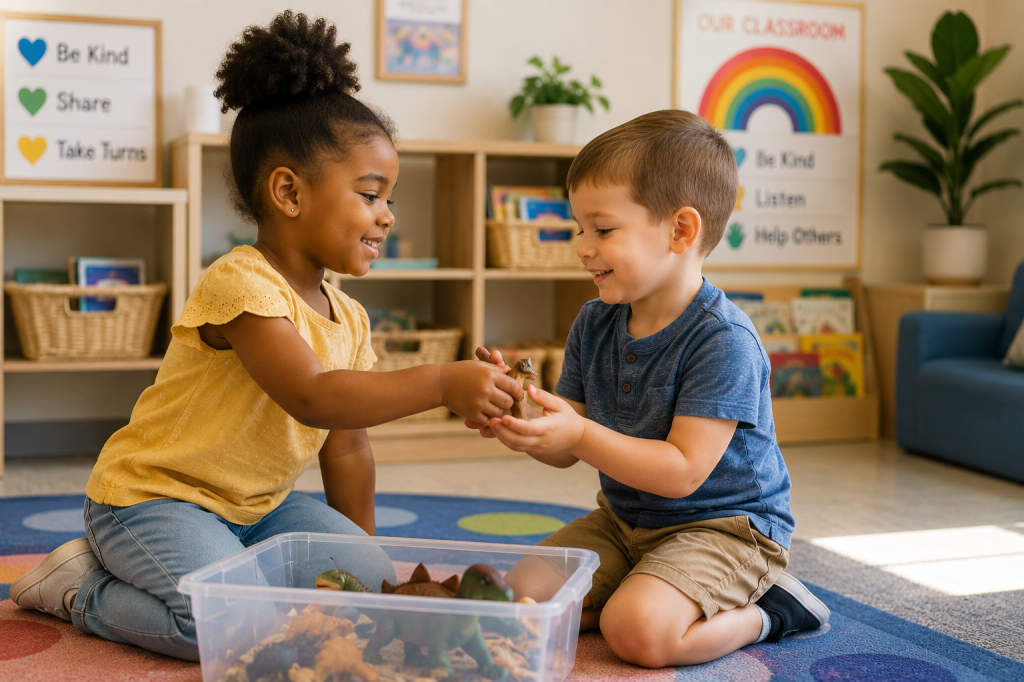
Play provides countless opportunities for children to develop social and emotional skills.
During play, children learn how to:
- Take turns
- Share materials
- Cooperate with others
- Solve conflicts
- Express feelings appropriately
- Develop empathy
Children also learn how to manage their emotions when things don’t go as expected. Being able to regulate emotions when frustrations happen is an essential skill. These experiences that happen during play help strengthen emotional regulation and build resilience over time.
Many of the skills needed for kindergarten success are learned through play long before a child enters a classroom.
Play Encourages Creativity and Problem-Solving
Open-ended play provides children with the opportunity to think creatively and develop flexible thinking skills. So what exactly is open-ended play? It is play that doesn’t require any specific direction or task. You provide children with items, and then you let them explore. Ever give a child pots, pans, and spoons from the kitchen to see what happens? If you haven’t, you should—also, the perfect opportunity for open-ended play.
When children build, create, invent, and imagine, they learn that there is often more than one way to solve a problem. With this knowledge, kiddos can experiment, make mistakes, learn from those mistakes, and try it all over again.
These experiences help children develop confidence in their ability to think independently and overcome challenges. Open-ended play is a safe space to fail at something, then keep trying until they get it right.
The creativity and problem-solving that are gained from open-ended play are valuable skills that support learning throughout life.
Play Strengthens Fine and Gross Motor Skills
When children engage in play each day, it helps them develop important physical skills that support learning and independence. Through their play, children strengthen the muscles, coordination, balance, and control needed for everyday tasks both at home and in school. The following can foster the development of a child’s physical abilities:
- Building with blocks
- Playing with Play-Doh
- Cutting and coloring
- Stringing beads
- Climbing
- Running
- Jumping
Fine motor activities help strengthen the small muscles in the hands and fingers needed for writing, buttoning clothes, and using scissors. Gross motor activities help children develop balance, coordination, body awareness, and overall physical strength. For fine motor, think small, intricate activities: writing, painting, lacing, beadwork, etc. For large motor, think big and exaggerated movement activities: running, jumping, obstacle course, jump rope, etc.
Having strong motor skills helps children participate successfully in classroom activities and different tasks at home. As children gain confidence in their physical abilities, they become more independent and better prepared to navigate the challenges of school and daily life.
Simple Ways to Encourage Play at Home
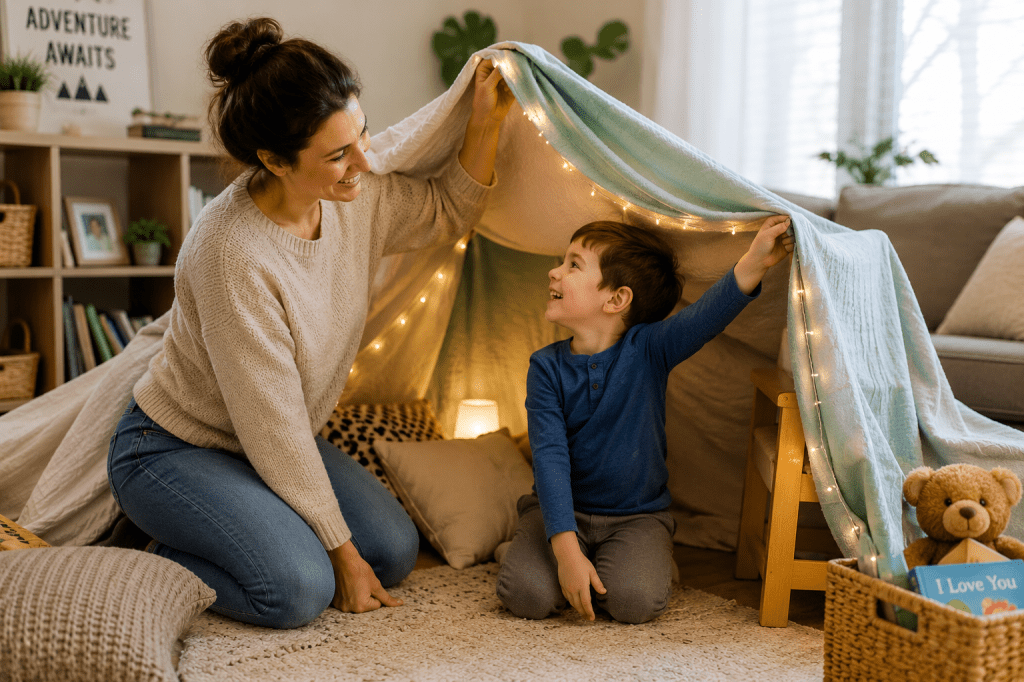
Supporting play at home certainly does not require expensive toys, elaborately planned activities, or a timed schedule. Some of the best learning happens through simple experiences that encourage children to explore, create, and use their imagination. Have you ever given your child a gift wrapped in a large box, only for them to ignore the new, shiny toy just to play with the box? That is the perfect example of embracing a moment to allow a child to engage in learning. Sometimes, it is the simple things that have the biggest impact on meaningful learning.
By providing these opportunities for open-ended play with materials such as household items (again, think pots and pans), treasures from nature, or various art supplies, children can direct their own learning. Set aside time for play and follow your child’s interests. You will assuredly foster creativity, problem-solving, communication, and confidence as you create memories together.
Easy Play Ideas for Home
- Build towers with blocks, cups, or boxes.
- Create a fort using blankets and pillows.
- Play with play dough or homemade dough.
- Read books together and retell the story.
- Put on music and have a dance party.
- Go on a nature walk and collect interesting items.
- Create artwork using recycled materials.
- Pretend to run a restaurant, store, or veterinarian clinic.
- Build a race track or town with toy cars.
- Create a sensory bin with rice, beans, or water.
- Play board games or simple card games together.
- Make an obstacle course indoors or outdoors.
- Sort household items by color, size, or shape.
- Practice animal walks such as bear crawls or frog jumps.
- Tell stories using stuffed animals or action figures.
- Explore the backyard and observe insects, plants, or clouds.
- Build with LEGO® bricks or other construction materials.
- Cook or bake together and let children help measure ingredients.
- Create a scavenger hunt around the house.
- Use cardboard boxes to build, decorate, and imagine.
Remember: The goal isn’t to keep children busy every minute. The goal is to provide opportunities for exploration, creativity, and connection. Often, the simplest activities create the richest learning experiences.
Play Is Learning
Play is one of the most powerful tools for learning in early childhood. Through play, children develop language, social skills, emotional regulation, creativity, problem-solving abilities, and confidence.
When adults value and support play, they provide children with opportunities to learn in ways that are engaging, meaningful, and developmentally appropriate.
The next time you see a child building, pretending, exploring, or creating, remember that important learning is taking place. Play may look simple, but it is helping children build the skills they need for success in school and beyond.
 The Intentional Classroom Co
Leave a comment